10 Hairstyles for Girls That Are Trendy and Easy to Do in 2026
The morning rush is real for any parent, and finding hairstyles for girls that are quick to create, genuinely trendy, and comfortable enough to last through an active school day solves a real daily challenge. The most notable children’s hair trends of 2026 lean practical as much as pretty. Long straight hair, short curly locks, natural coils, or anything between — this list covers something for most hair types.
What stands out about 2026’s styles for girls is how much they favour personality over perfection. This year’s most popular children’s hairstyles read joyful and expressive rather than rigidly formal, leaving plenty of room for each child’s own style to come through. Ten of the most trendy, genuinely easy hairstyles for girls in 2026 follow below.
The Coquette Ribbon Half-Up
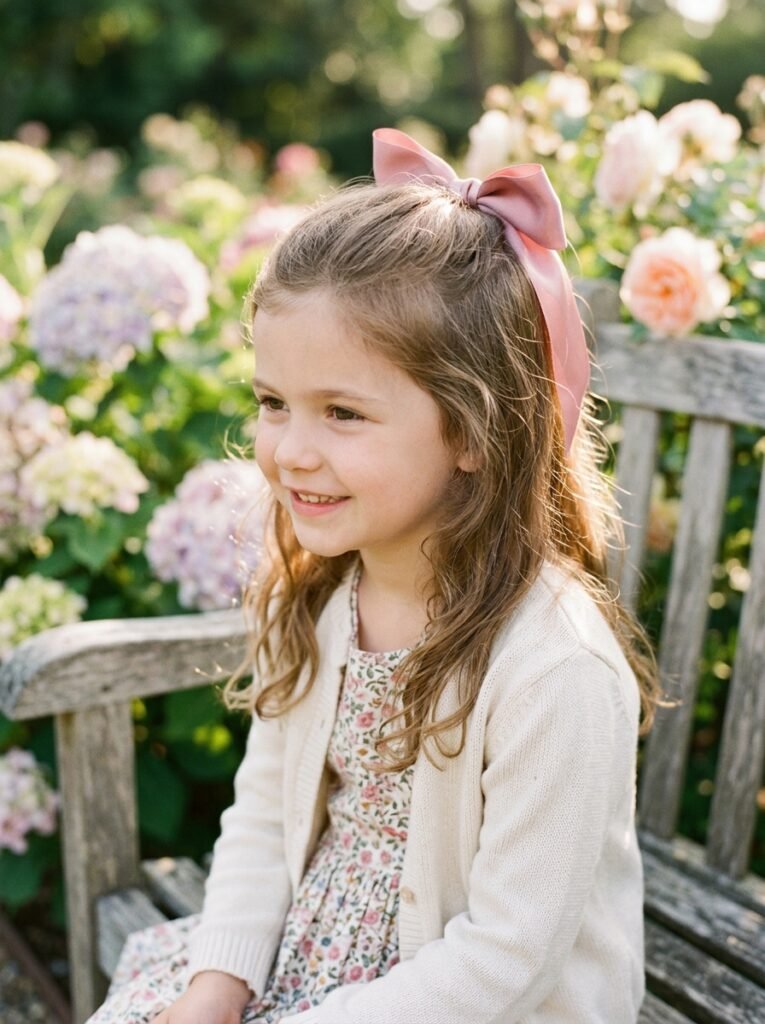
The coquette aesthetic has moved through fashion broadly and filtered into children’s hairstyles in an age-appropriate way this year. The style gathers the top section into a small half-up and secures it with a satin or grosgrain ribbon tied into a soft bow — sweet and on-trend without reading as anything but suitable for a child.
A ribbon bow tends to draw enthusiastic reactions from other parents and kids alike, since the look transcends age and personal style pretty broadly. A navy or red grosgrain ribbon reads timeless and preppy, pairing well with school uniforms. A soft blush satin ribbon suits parties. A gingham or floral ribbon adds a seasonal note through the school year.
The style works across every hair length and texture, which keeps it broadly useful. On naturally curly or wavy hair, the free-hanging texture below the ribbon builds a voluminous frame that adds its own dimension. The whole thing takes under two minutes — a real help on rushed mornings.
The Double Dutch Braid Pigtails
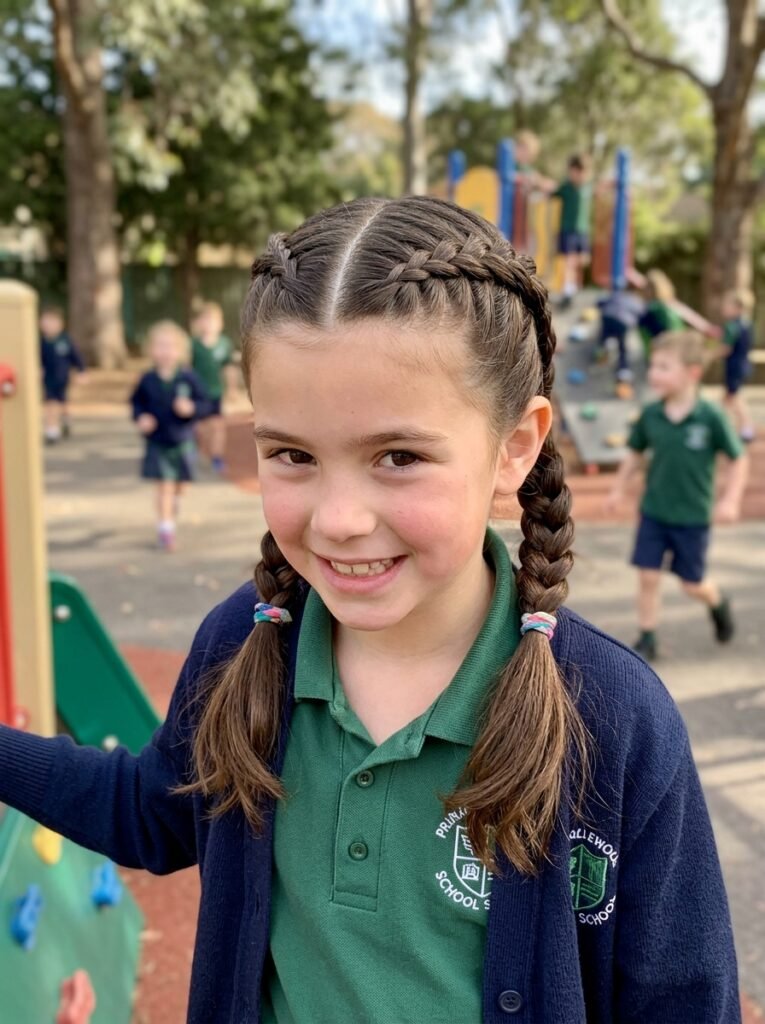
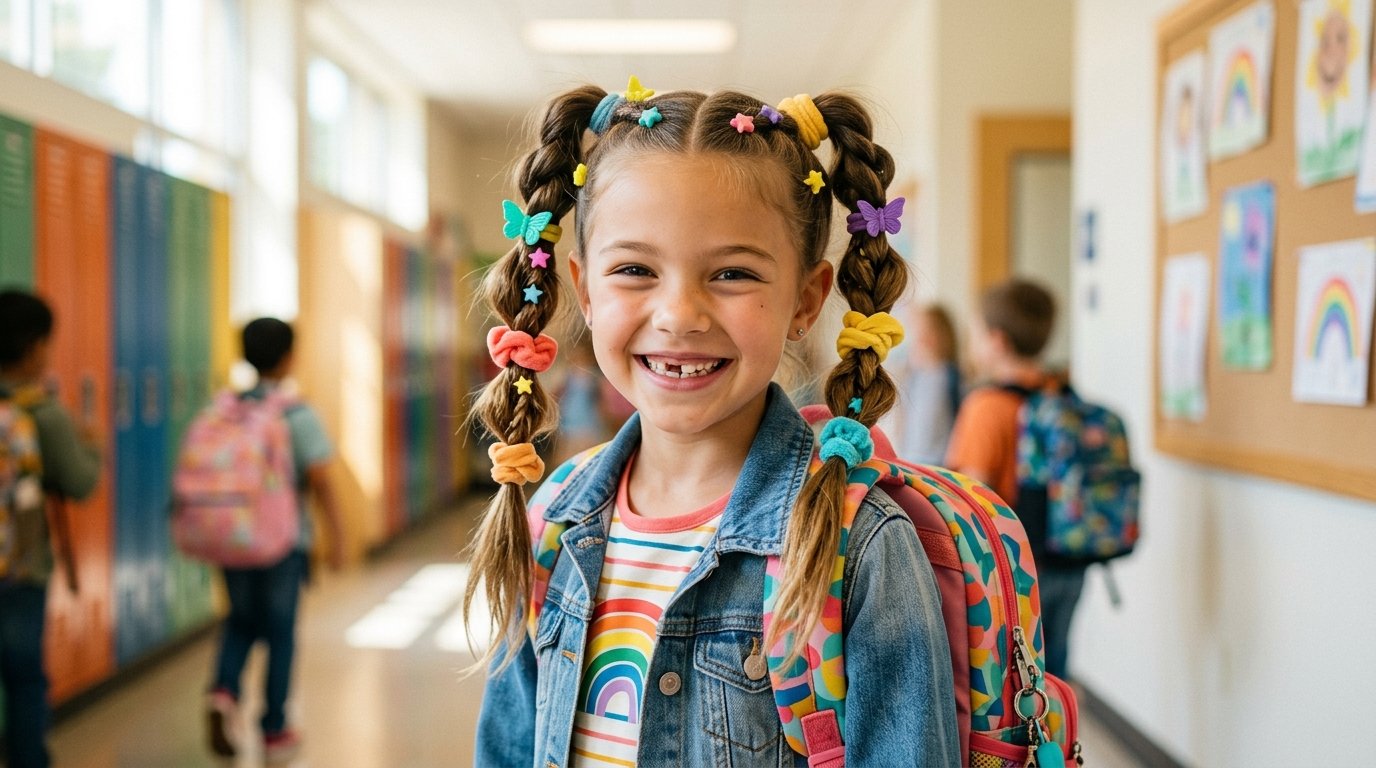
Double Dutch braid pigtails combine genuine visual appeal with all-day staying power, which makes the technique worth learning. Dutch braids cross underneath rather than over the top, so the finished braid sits raised on top of the hair rather than woven into it — a more dramatic effect than a standard braid.
The pigtail version braids one Dutch braid on each side of a clean centre part, starting at the hairline above each ear and working down to the nape before finishing in a simple ponytail or braid. The symmetry frames the face well and holds up through playground time and sports without needing any touch-ups from morning to evening.
The technique itself takes a little practice, though most parents pick up the basic motion within two or three attempts. Working on slightly damp hair with a light-hold gel or braid cream keeps each section manageable and the result more polished — a skill that, once learned, opens up a lot of durable options for busy mornings.
The Twisted Space Buns
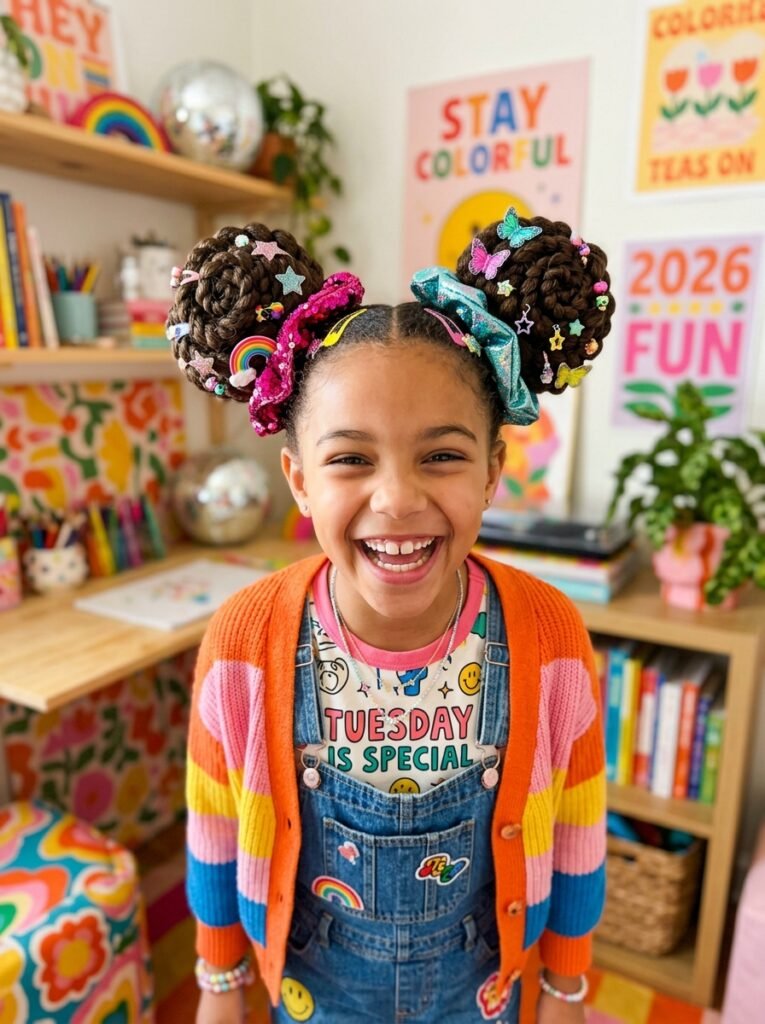
Space buns have stayed a children’s hairstyle staple for years, and the twisted version adds texture that keeps them feeling current in 2026. Twisting each section consistently in one direction before wrapping it into the bun builds a spiral texture on the surface — more intricate than a plain bun for only a few extra seconds of effort.
Sitting symmetrically on either side of a clean centre part, the style reads retro and current at once, and suits a wide age range — toddlers who can sit still long enough, right through to older primary and middle-school children who like a more expressive look.
Coordinating scrunchies, ribbon bows, or sparkly clips personalise the buns further, and letting a child choose her own accessories gives her real ownership over the style — a small choice that tends to make the whole morning routine more collaborative.
The Sleek High Ponytail with a Bow
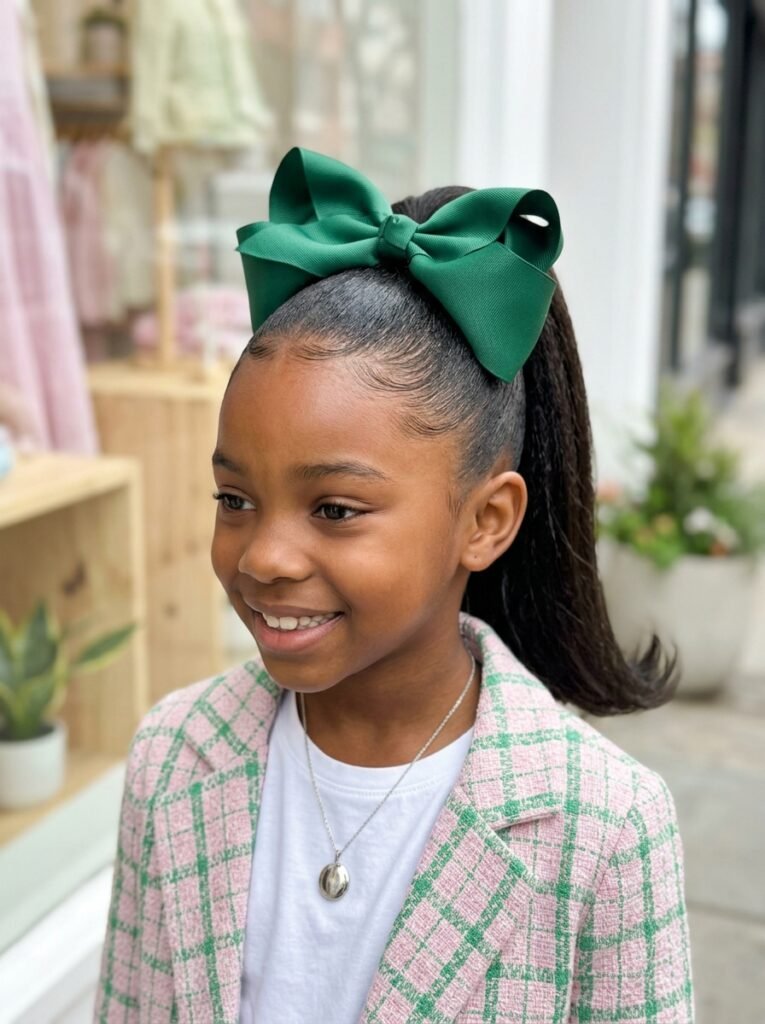
The sleek high ponytail has long been a staple, and adding an oversized bow at the base turns it into a genuinely trendy, more noticeable look this year. The contrast between the smooth, pulled-back hair and a voluminous bow builds visual tension that reads polished and playful together.
Smoothing the hair back with a soft-bristle brush and a little water or light-hold gel tames flyaways before gathering it into a high ponytail — the higher it sits, the more energetic the overall effect. Securing it firmly, then tying a generous ribbon or clipping in a large bow at the base, finishes the signature look.
The style suits active kids well, since the high ponytail keeps hair fully off the face and neck while the bow adds a decorative touch. A little edge control or smoothing cream along the hairline before securing keeps baby hairs in place through the day.
The Knotless Mini Braids
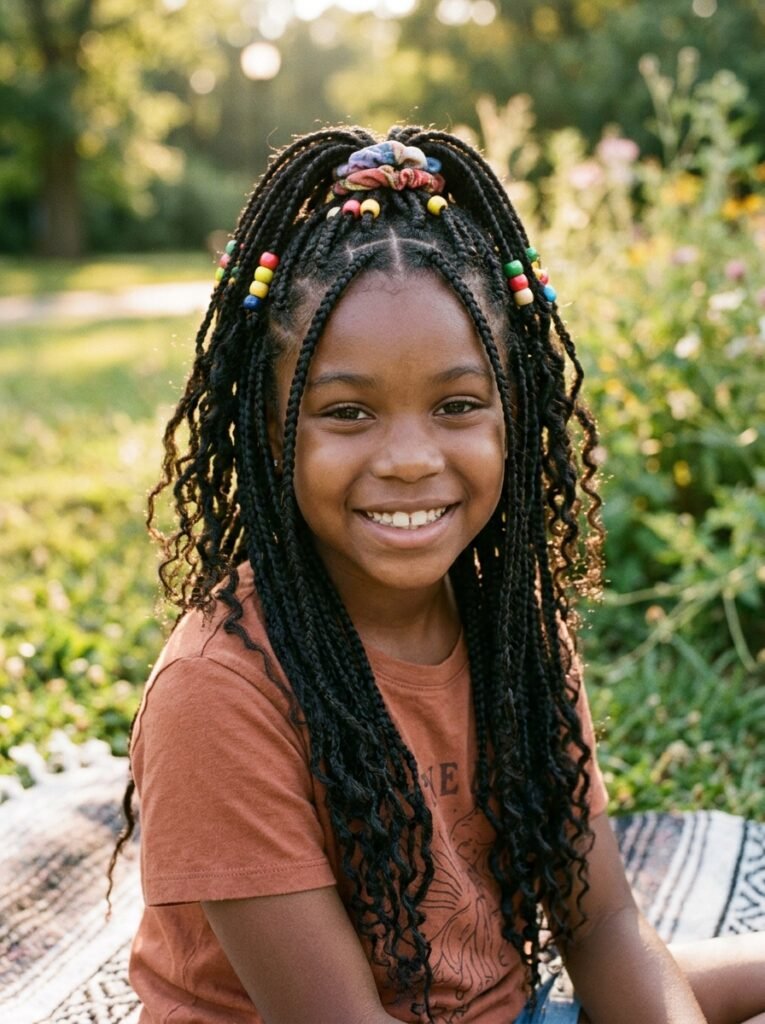
Knotless mini braids have become a favoured style for natural and Afro-textured hair, largely because they’re noticeably more comfortable than traditional braiding. Rather than starting with a knot at the scalp, knotless braids begin with the natural hair and gradually feed in braiding hair, which puts far less tension on the scalp and hairline — comfortable enough for a full active school day.
The mini size builds an intricate, detailed look admired widely in the natural hair community, and the style adapts easily: worn down for full impact, gathered into pigtails or a high ponytail, arranged half-up, or built into an updo for a special occasion. More styling ideas for natural texture sit in this guide to hairstyles for girls with curly hair. That range means one install covers weeks of different looks without another salon visit.
Caring for the braids means keeping the scalp moisturised with a lightweight oil or braid spray every two to three days, and wrapping the braids in a silk bonnet or scarf at night to cut down on friction and frizz. With good care, they hold up for four to six weeks, which makes daily styling minimal for the whole wear period.
The Butterfly Braid
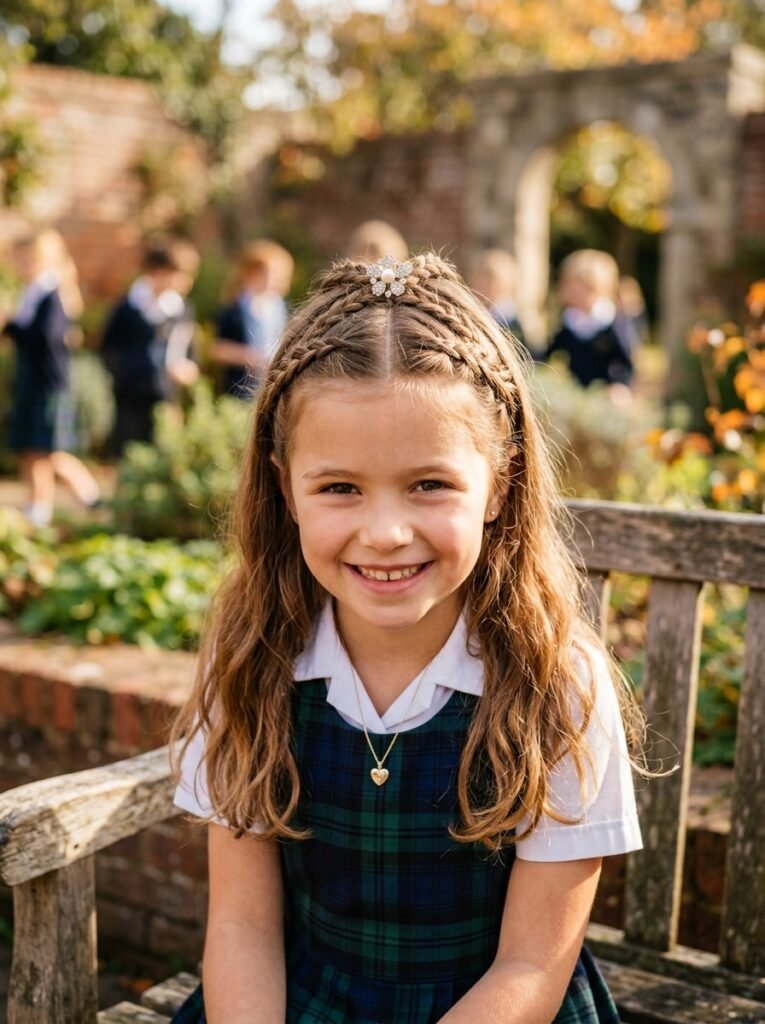
The butterfly braid looks more complicated than it actually is once the basic technique clicks. Two small braids at the temples cross over each other at the top of the head and pin in place to form a shape resembling butterfly wings, with the rest of the hair left down or gathered depending on length and occasion.
The style suits days that call for something a little more special without a full elaborate updo — school portrait days, class parties, birthdays, and family events all fit, since the butterfly detail creates a focal point that photographs well.
The style works on medium to long hair, and the wing size scales with how much hair goes into each temple braid. Small, clear bobby pins tucked invisibly underneath hold everything in place without visible hardware, and a small decorative pin or tiny flower at the centre crossing point finishes the look.
The Waterfall Braid
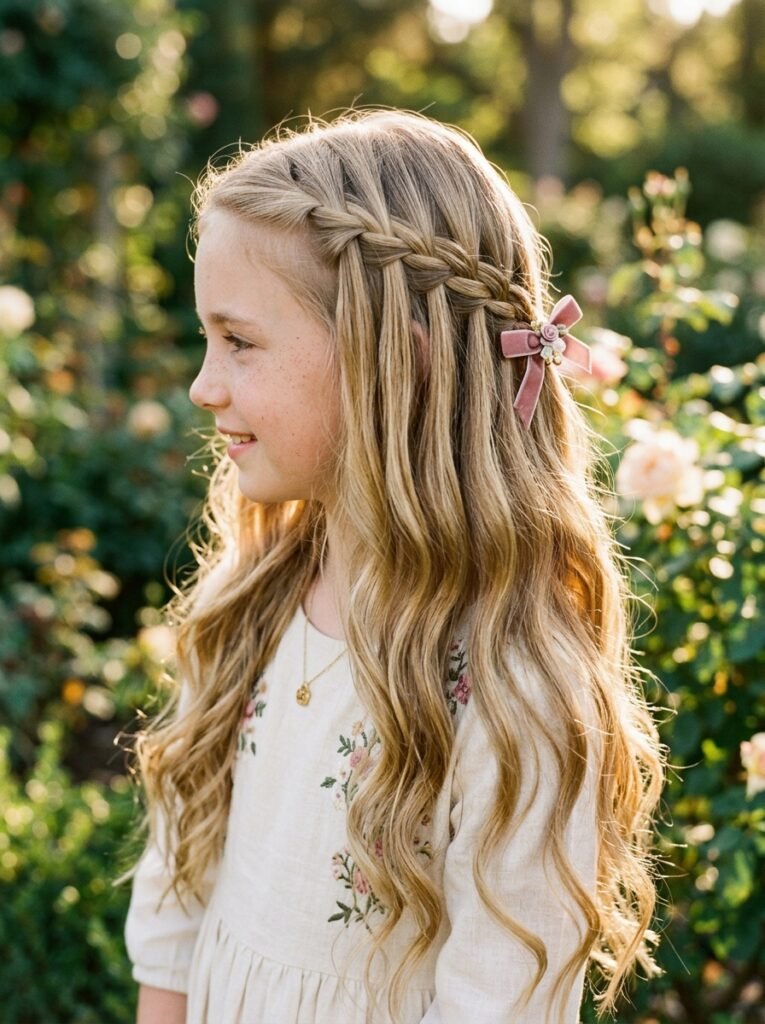
The waterfall braid is a French braid variation where, instead of incorporating all the hair as the braid travels across the head, sections drop and cascade freely downward through it — a flowing effect unlike a standard braid.
Longer hair shows this effect off particularly well, since the dropped sections build a flowing quality with real movement. The braid typically runs horizontally around one side of the head from temple to back, with each dropped section cascading over the shoulder. A small decorative clip or bow where the braiding ends keeps it neat without disrupting the effect.
The technique takes more practice than a standard French braid, though the pattern of picking up, crossing, and dropping each section becomes intuitive with repetition. A slow tutorial video followed by practice during a relaxed evening, rather than a rushed morning, tends to make learning it far less frustrating.
The Beaded Braids

Beaded braids bring a joyful, culturally rich quality that most children love wearing, with colourful beads clicking at the ends of small braids or twists. Beads have decorated African and African-diaspora hairstyles for centuries, and the tradition is celebrated widely today — a style covered further in this guide to hairstyle inspiration for Black girls.
Small box braids, cornrows, two-strand twists, and loose braids all take beads well. The beads themselves range across bright primary colours, metallic gold and silver, pastels, and even alphabet beads that spell out a name or word — most kids enjoy being involved in choosing their own colours and arrangement.
Threading beads takes a bead threader or a piece of wire folded in half, with each bead secured by a small crimping bead or a tight knot in the braid. Safety matters most for younger children specifically — beads should be at least 1¼ inches in diameter, the size Nemours KidsHealth recommends to prevent an item being swallowed or lodged in the airway, and every bead needs to be securely attached.
The Twisted Crown with Flowers
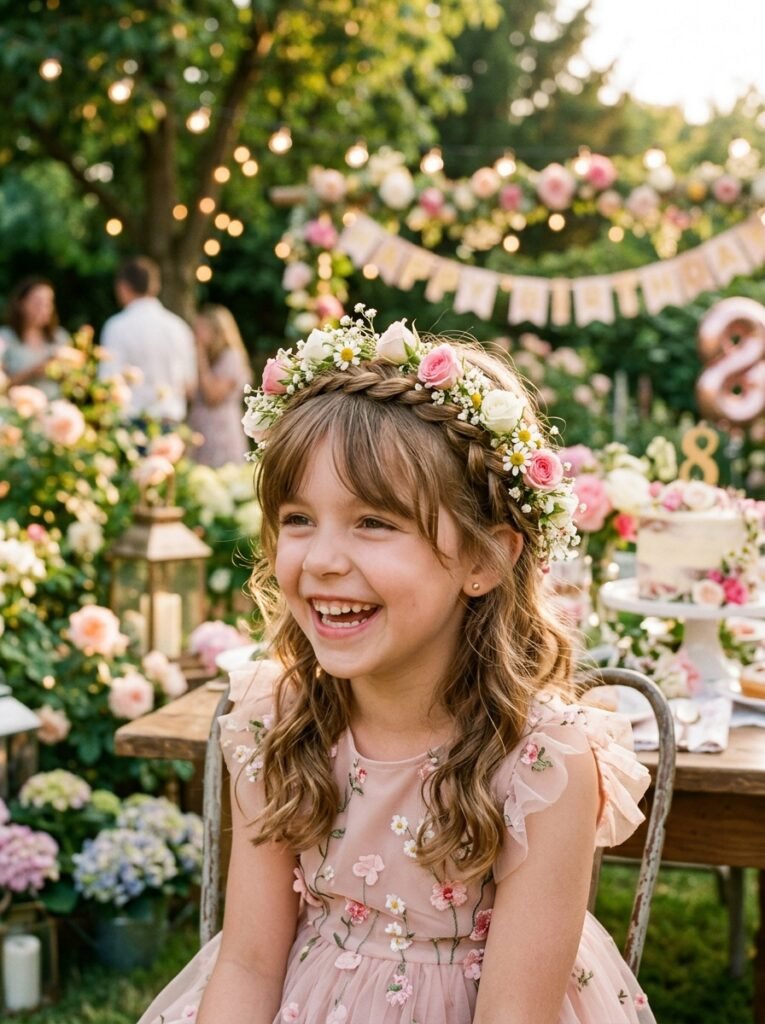
Two loose twists taken from each side of the head, pinned into a crown formation and decorated with small flowers, build a look with a fairy-tale quality that’s simple in technique but striking in effect.
Fresh flowers suit special occasions — birthday parties, flower-girl duties, family celebrations — where the extra flourish makes sense. Small roses, baby’s breath, tiny daisies, and delicate wildflowers all work at children’s scale and coordinate with a celebration’s broader florals. Silk flowers offer the same look with the practical benefit of being reusable year-round.
The style works on medium to long hair, and the twists don’t need to be precise — a little natural looseness paired with the flowers often looks better than rigid technique. Working with slightly damp hair and a light-hold gel or cream keeps each twist smooth and helps the sections hold through the wear period.
The Side Swept Braid with Accessories
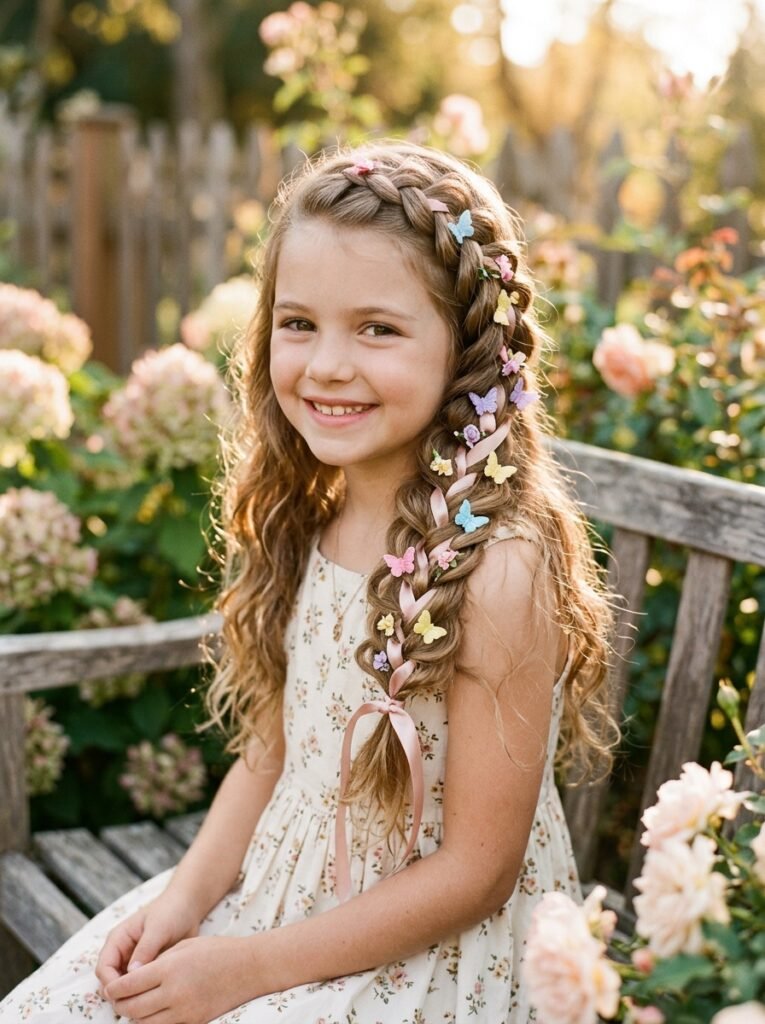
A simple braid — three-strand, fishtail, or Dutch — started at one temple and allowed to travel over one shoulder builds a romantic, slightly asymmetrical look, with the rest of the hair left loose or lightly waved behind. That asymmetry creates visual interest a centred braid can’t quite match.
Accessories are what make this feel current: tiny butterfly clips scattered along the braid, small pearl pins pushed through certain sections, a ribbon woven alongside the plait, or a single dramatic bow clip at the start all build a different personality from the same base structure.
The style suits every hair length and texture, and looks especially good when the loose hair behind the braid carries a little natural wave for contrast against the structured braid in front. A light sea salt or texturising spray through the loose section before braiding encourages that wave on straight or slightly wavy hair.
Final Thoughts
Hairstyles for girls in 2026 lean toward joy and individuality, and a daily hair routine, approached with a little patience, can become a genuinely meaningful part of a parent-child relationship. Whether the choice lands on a quick coquette ribbon bow for a school morning, intricate double Dutch braids built to last the week, or a twisted flower crown for a special occasion, comfort and how a child feels in the style matter more than any trend.
The morning hair routine is one of those small daily rituals many parents and children look back on fondly. A repertoire of achievable, well-loved styles turns that routine into something to look forward to rather than rush through.