New Hairstyles for Teenage Girls That Are Fun and Trendy
Trying new hairstyles is one of the easiest ways for a teenager to experiment with a fresh look. New hairstyles for teenage girls in 2025 lean into fun and self-expression. Some are bold. Some are soft and romantic. Others take under three minutes on a rushed school morning. There is a style here for nearly every mood, and most cost nothing more than a few minutes and a hair tie.
Trying different hairstyles is a genuinely healthy part of the teenage years. Adolescence is widely seen as a time when identity exploration matters most. Researchers at ACT for Youth explain that trying on different forms of self-expression, including appearance, is part of how teenagers work out who they are. A new hairstyle is rarely just a new hairstyle. It is one small, low-stakes way of testing out an identity.
Ten fun, trending hairstyles for teenage girls follow below. A few practical notes on healthy hair care are included too.
The Curtain Bang Refresh
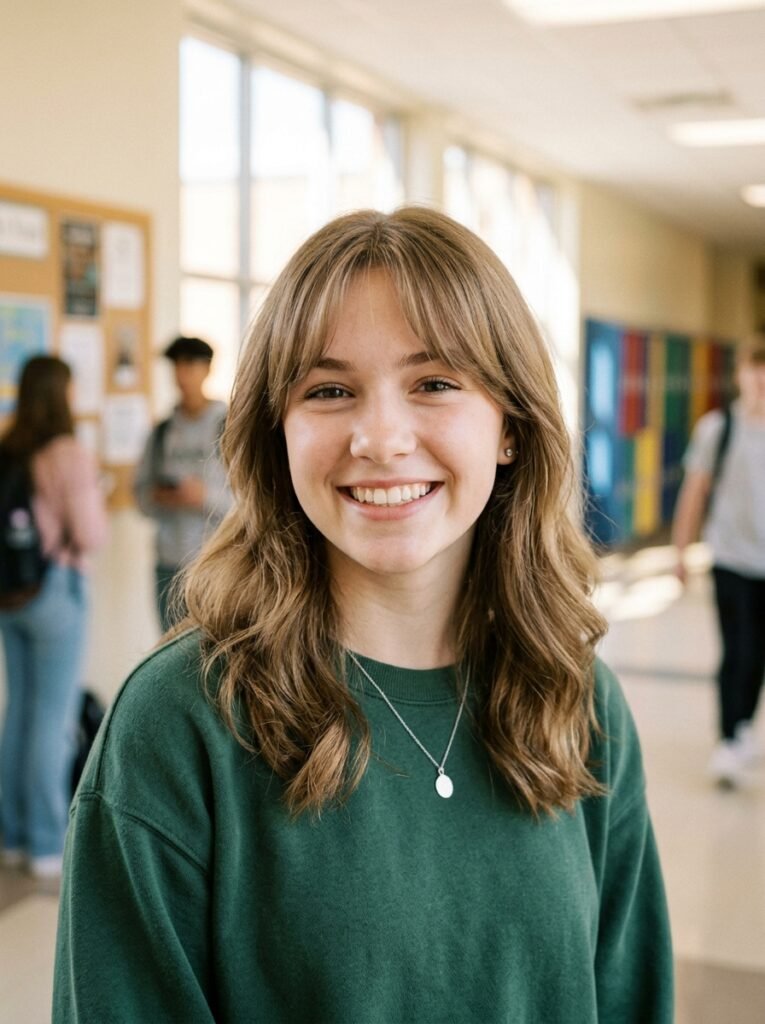
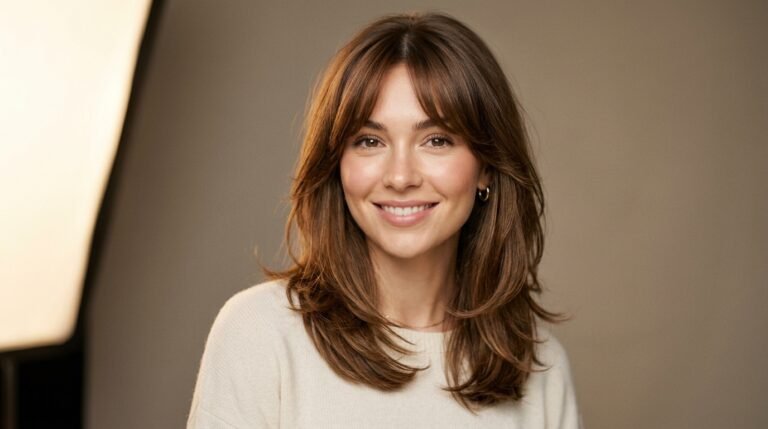
Curtain bangs are having their biggest moment yet. They are soft and face-framing. They work on straight, wavy, or curly hair. One of the best things about them is how low-commitment they are. They blend into the rest of the hair as it grows. There is no awkward stage, unlike a blunt fringe.
That easy growing-out phase comes down to basic hair biology. Hair grows at roughly half an inch a month on average. That figure comes from the American Academy of Dermatology, shared in Healthline’s guide to haircut timing. Curtain bangs are cut with extra length and angle built in. That slow growth barely shows for months.
Curtain bangs suit every face shape. They part gently in the middle and sweep outward. Both sides of the face get framed evenly. A closer look at pairing the bang shape to a specific face shape sits in this guide to curtain bangs hairstyles. Paired with loose waves or a simple blowout, the whole look reads polished. It barely adds time to a morning routine.
Styling curtain bangs at home is simple once the motion clicks. A small round brush and a hairdryer do the job. Sweep each side gently outward. A stylist can also cut them long enough to tuck behind the ears. That helps on days when a clear face is needed for sports or a test. A little dry shampoo at the roots keeps them from looking flat between washes.
The Coquette Half-Up Style
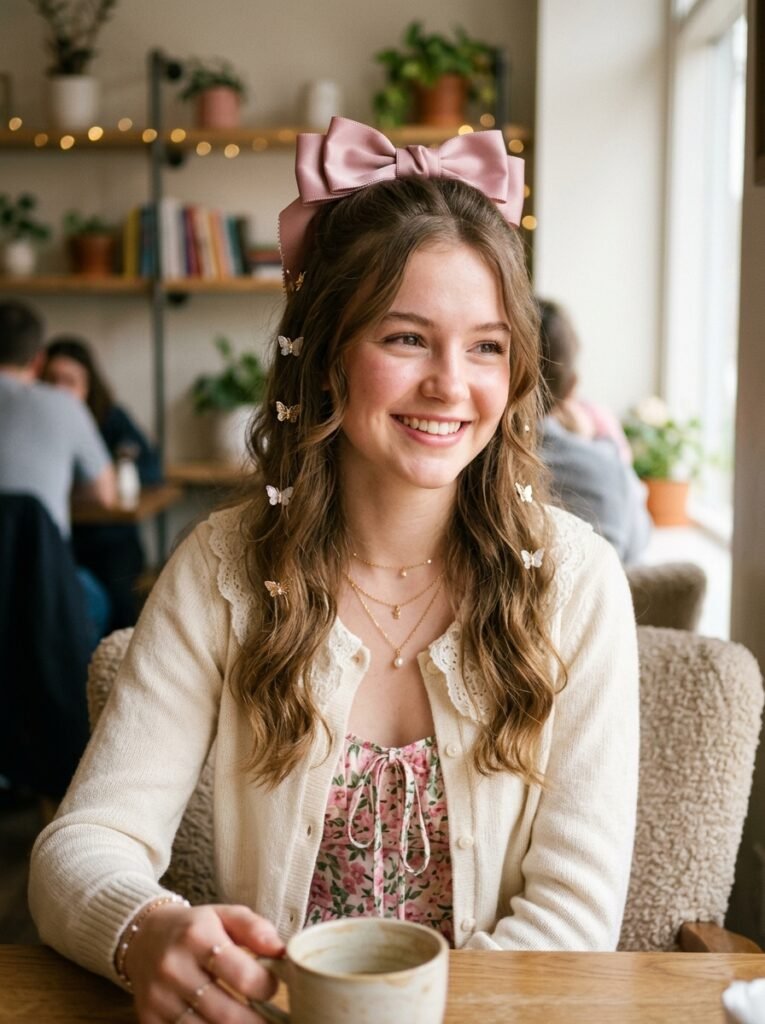
The coquette aesthetic has taken over social media. The hairstyles that go with it are pretty and wearable. A simple half-up section, secured with a ribbon bow, pearl clips, or butterfly pins, adds a sweet finishing touch. Looks put together. It takes about three minutes. It works on nearly every hair length and texture.
What makes this style so appealing is how easily it transforms ordinary hair. Nothing special needs to happen to the rest of it. Gather the top section. Secure it with a favourite ribbon or clip. Let the rest fall naturally. That is the whole technique. The accessory carries the look.
Ribbon bows have become one of the most recognisable parts of this style. They come in nearly every colour and fabric. Classic black satin works well. So do pastel organza and plaid or gingham prints, which suit school days particularly well. A small collection of ribbons and clips means the same half-up can look different every day.
The Effortless Textured Ponytail
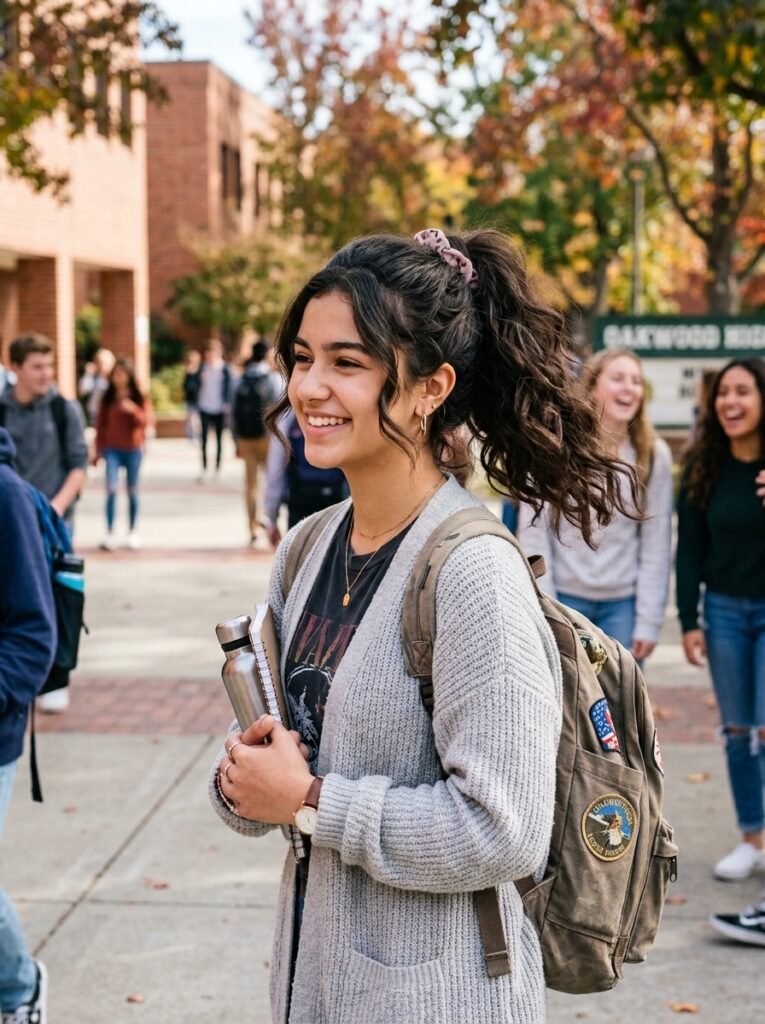
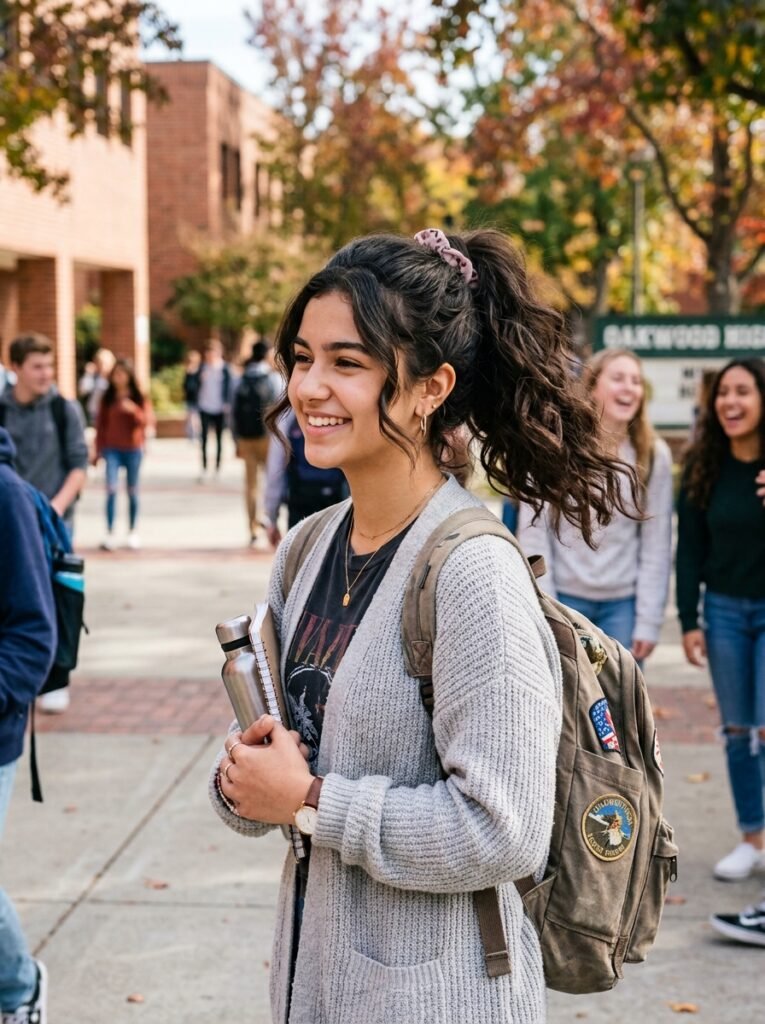
The ponytail has been a hair staple forever. The 2025 version is far more interesting than a basic pulled-back look. It features loose pieces pulled out at the temples and nape. A slightly bumped-up section at the crown adds lift. A wrapped detail hides the base of the elastic. It looks like more effort went in than actually did, which is exactly the point.
Deliberate imperfection is what makes it read stylish rather than simply functional. Pull a few face-framing pieces loose at the front. Gently tug the ponytail to loosen it once secured. A little texturising spray through the lengths beforehand adds grip. That grip holds the shape through a full day.
This style suits school, sports practice, and everything between. It keeps hair off the face while still looking considered. Swapping a standard hair tie for a silk scrunchie adds a small fashionable touch, and it is gentler on the hair too. A tight elastic wrapped around the same spot every day can eventually stress that section. Rotating the ponytail position, and choosing a soft-toothed tie, helps protect the hairline over time.
The Butterfly Clip Updo
The claw clip has made a genuine comeback. It remains one of the most useful accessories for a quick style. A large claw clip, or a scattering of smaller butterfly clips, turns hair from basic to finished in under sixty seconds. That makes it one of the fastest options here for a rushed morning.
The large claw clip updo gathers hair loosely at the back. A slight twist, then a big clip, lets the ends spill out over the top. It works on medium to long hair. A little natural texture or second-day messiness usually helps rather than hurts.
Smaller butterfly clips create a different effect. Pinning back sections, or decorating a simple low bun, leans into the playful, Y2K-inspired aesthetic having a moment right now. Collecting clips in a few colours and finishes keeps a fun option on hand, even on the busiest mornings. Mixing metallic and pastel clips together tends to look more curated than sticking to just one shade.
The Braided Crown
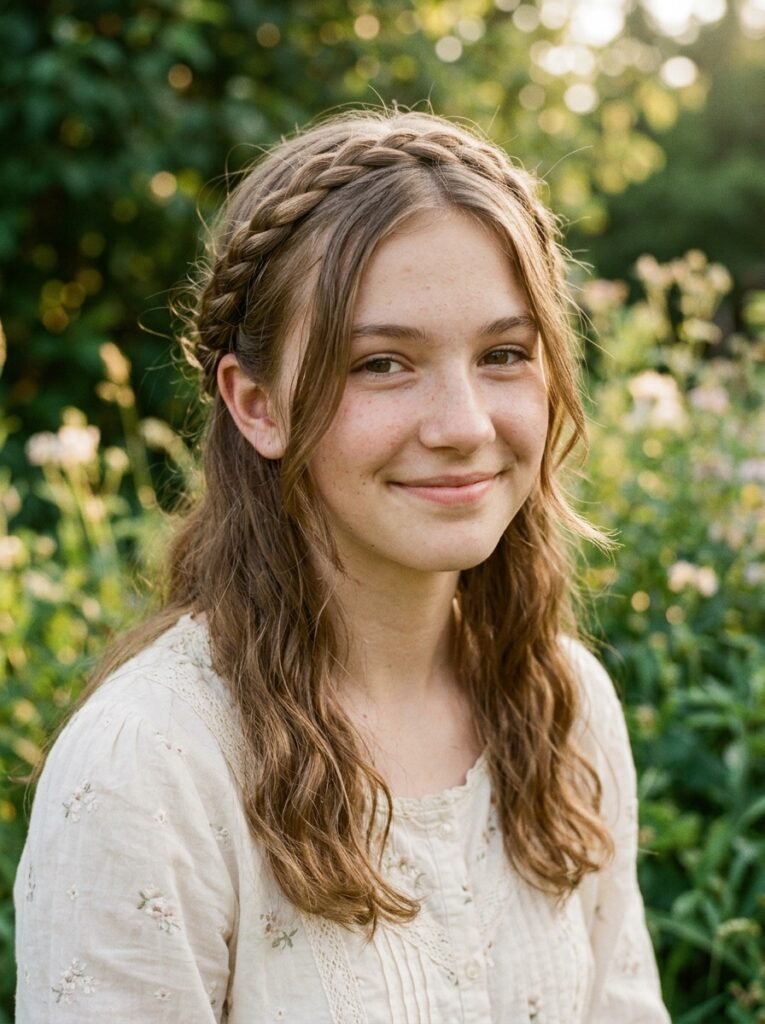
The braided crown is a timeless style. This year it is worn in fresher, more relaxed ways. Two braids created at the front and pinned back over the top create a romantic look. It keeps hair off the face while showing off some braiding skill.
This style works on straight and wavy hair alike. It looks especially good with a few face-framing pieces left loose at the front. Leaving the rest of the hair down creates a nice contrast. The structured crown meets the free-flowing length below. The whole look has a slightly vintage quality.
The braided crown is a genuinely useful skill to learn. It needs no heat, no special tools, and no products. Once the technique clicks, the whole style takes under ten minutes. It works for school days, casual hangouts, and special occasions alike. Practising on a friend’s hair first often makes the technique click faster than practising alone in a mirror. This guide to trying new hairstyles without cutting hair covers more no-commitment techniques worth practising.
The Bubble Ponytail
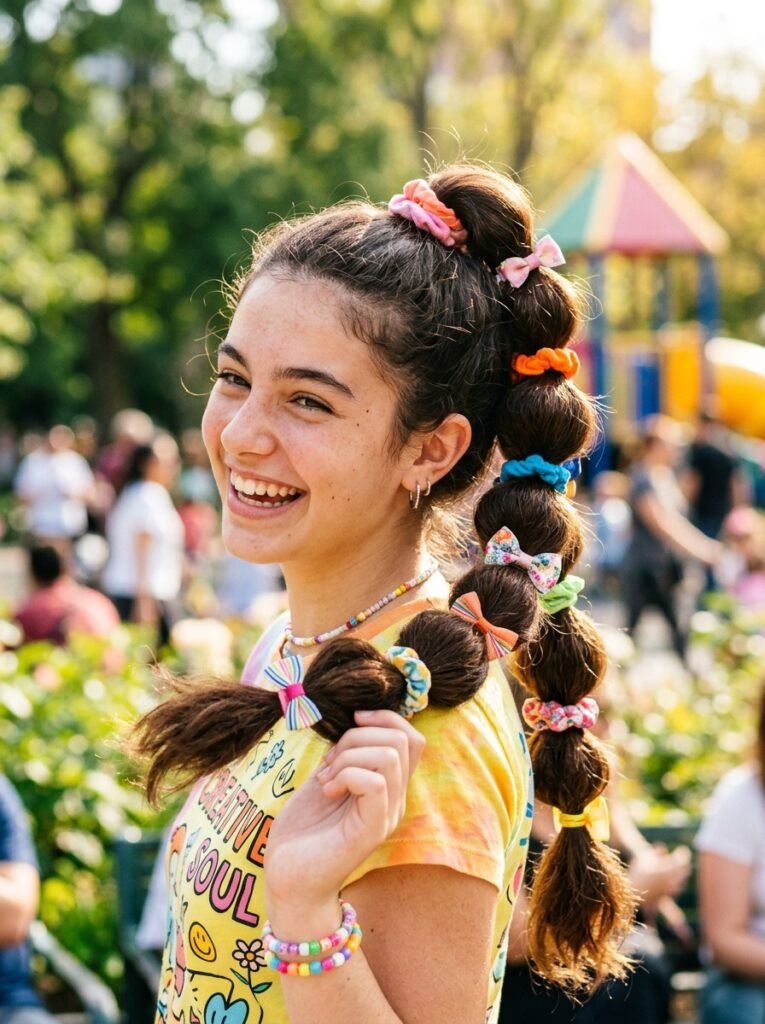
The bubble ponytail is one of the more visually fun styles here. It has a playful energy that suits experimenting freely. Hair goes into a regular ponytail first. Additional hair ties go in every two to three inches down the length. Gently pulling each section outward between ties builds those rounded bubble shapes.
This style works on medium to long hair. It looks especially good on thick or voluminous hair, where each bubble has plenty of material to puff out. On finer hair, a little backcombing or texturising spray on each section helps build fuller, rounder bubbles.
Colourful scrunchies or ribbon bows at each tie point take this style from fun to eye-catching. This look gets more interesting the more personality goes into it. Mismatched colours and playful combinations suit it well. Uneven bubble sizes are part of the charm rather than something to fix.
The Space Buns
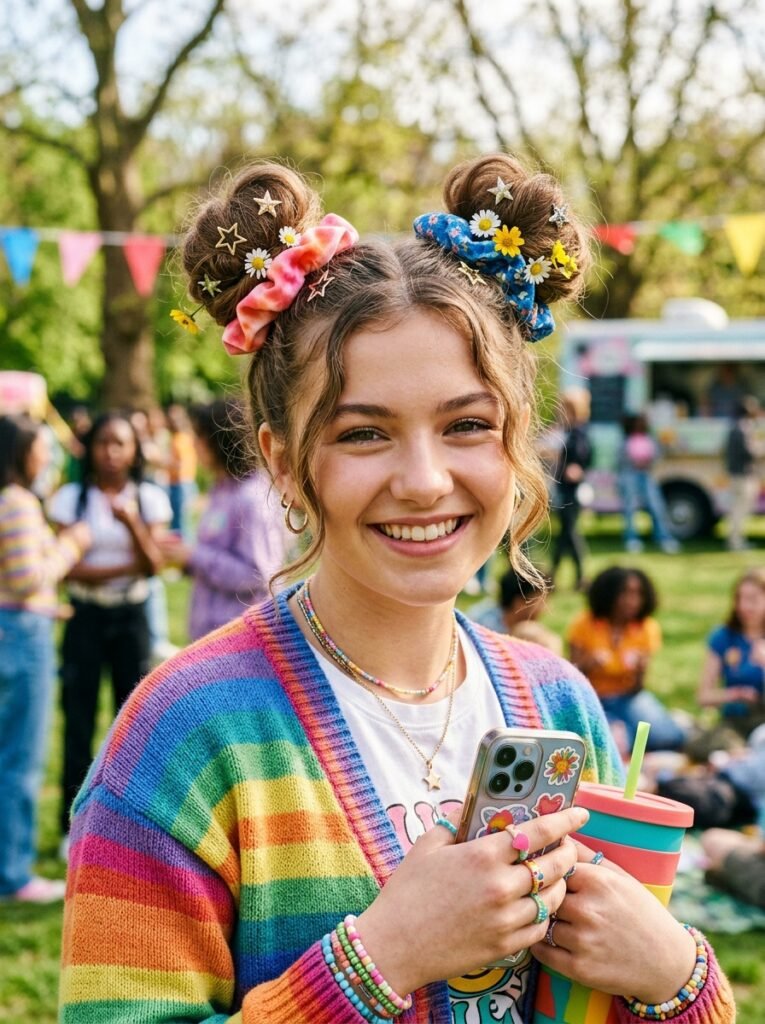
Space buns remain one of the most iconic fun hairstyles around. Two high buns on either side of the head sound simple, and they genuinely are. The range of ways to customise the look is wide. Neat and polished, messy and undone, or half-space-buns above loose hair. There is a version for most aesthetics.
Space buns are a solid option for days when hair needs to be fully out of the way. They secure everything at the crown while still looking deliberate. Face-framing pieces left loose at the temples, small pins tucked into each bun, or colourful scrunchies all add a personal touch. Uneven or slightly lopsided buns tend to read as intentionally casual rather than messy.
One thing is worth knowing about any tight style worn often. Pulling at the same section of hairline, day after day, can eventually strain the hair follicle. Dermatologists call this traction alopecia. Researchers at Johns Hopkins link the risk to tight styles worn frequently over long periods, not to any single day of wear. Keeping space buns and ponytails a little looser, and varying where the parting sits, helps protect the hairline.
The Sleek Low Bun with a Middle Part
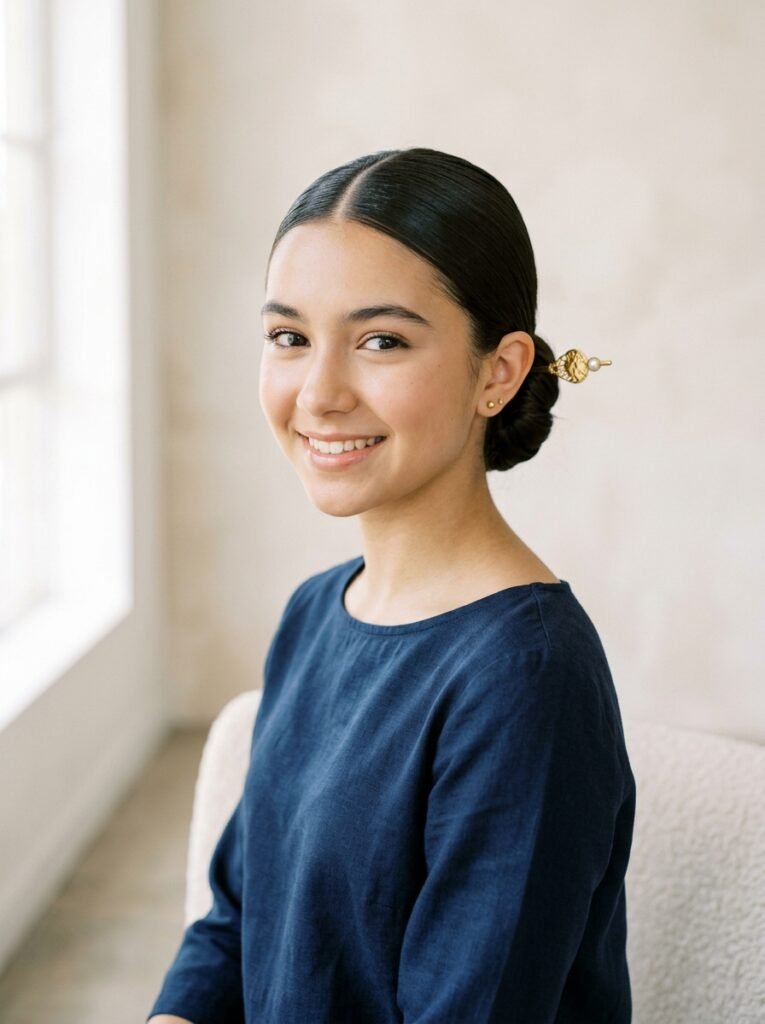
The sleek low bun with a clean middle part has a more polished, grown-up energy. It still feels age-appropriate rather than formal. It takes just a few minutes with the right technique. A smoothing serum, a fine-tooth comb for a precise part, and a simple hair tie cover most of what is needed.
The sleekness gives this style its distinctive look. A little extra time smoothing flyaways makes a real difference. Keeping the hair flat from root to bun matters most. A light-hold edge control along the hairline, plus a quick mist of shine spray, adds the final polish.
Anyone using heat tools to smooth the hair first benefits from a heat protectant. The American Academy of Dermatology covers this in its guidance on everyday hair care. Repeated heat exposure without protection gradually weakens the hair shaft. That shows up over time as dryness and breakage, not all at once. A cool-tip flat iron pass with a protectant applied first keeps this look from costing long-term hair health.
This style works beautifully as a base for accessories. A hair stick, a vintage-inspired pin, or a simple gold cuff adds personality and sparkle. It also suits school presentations and formal events. Any occasion calling for a confident, polished look works well here. It photographs cleanly too, which matters for anyone posting pictures of a new look.
The Messy French Braid
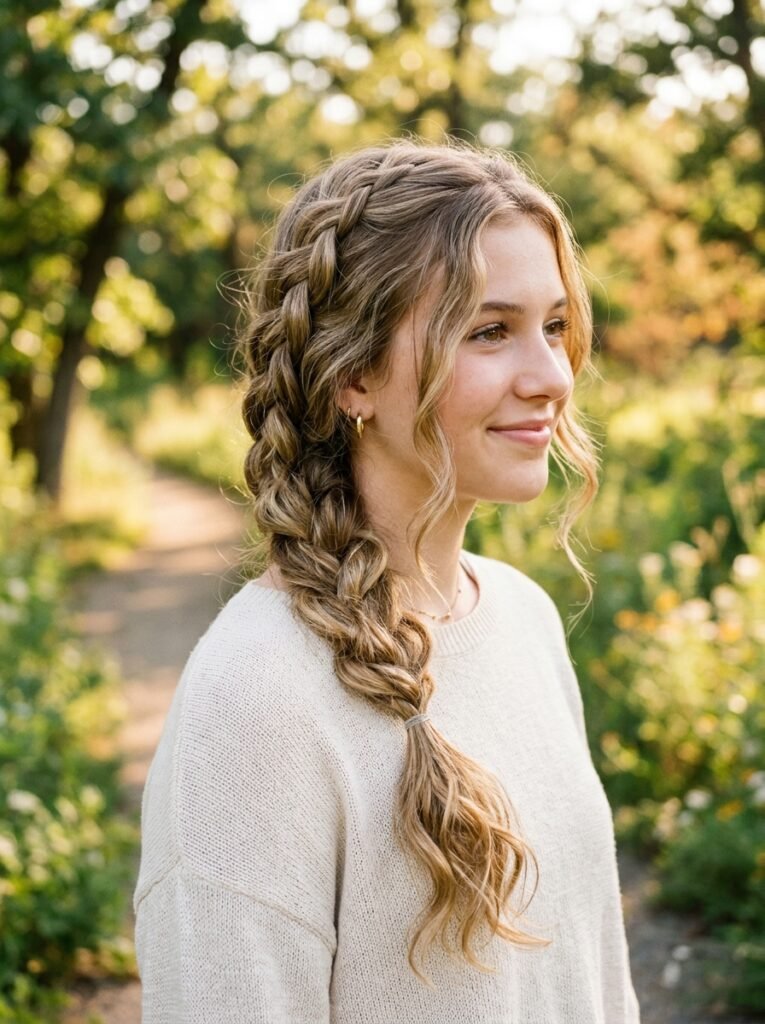
The French braid is a classic. The loose, slightly undone messy version has a fresh quality. Rather than aiming for a tight, uniform braid, this approach pulls each stitch a little looser. Gently tugging the finished braid wider completes the look. The result reads like naturally great hair, not a technical achievement.
The messy French braid works on every hair type from medium to long. It looks especially good paired with a few loose, softly waved face-framing pieces. On naturally wavy or curly hair, the braid has a particularly organic quality. The natural texture adds dimension to each stitch without extra styling. A light hold spray keeps the looseness from unravelling completely by the end of the day.
Learning to French braid is a rewarding skill to pick up. Once the basic technique is mastered, the messy version is actually easier than the neat one. The looseness removes the pressure of perfection. A little mirror practice is usually all it takes. Anyone with curly or coily hair after more braid ideas will find further options in this guide to hairstyles for curly hair.
The Colorful Money Piece
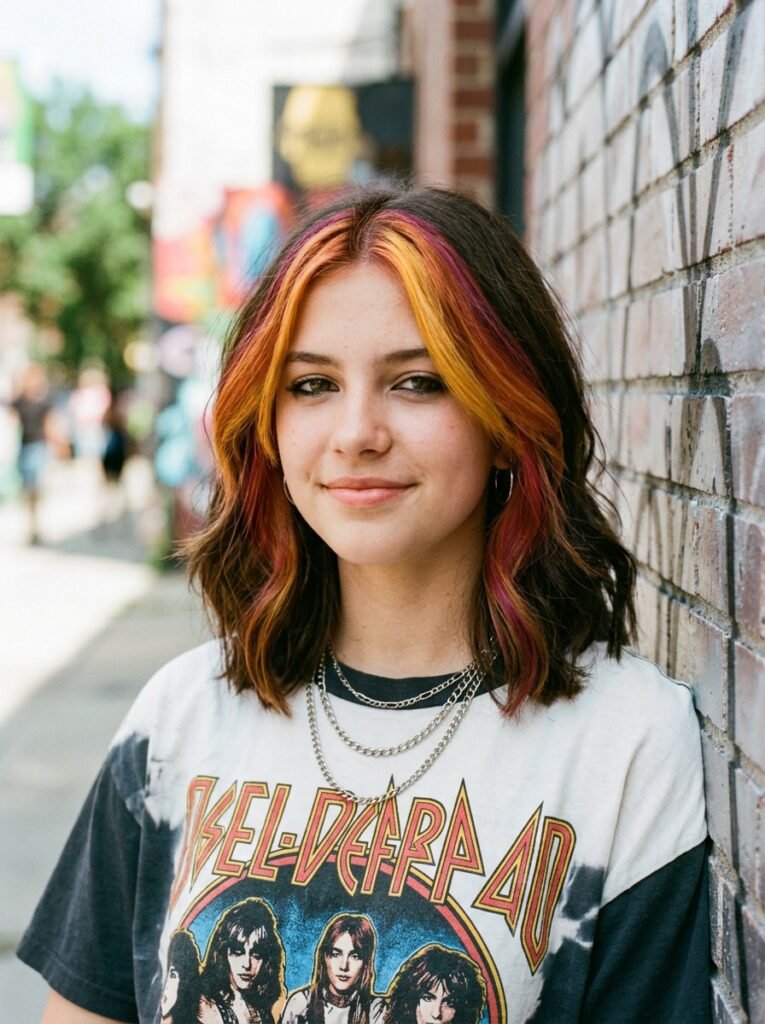
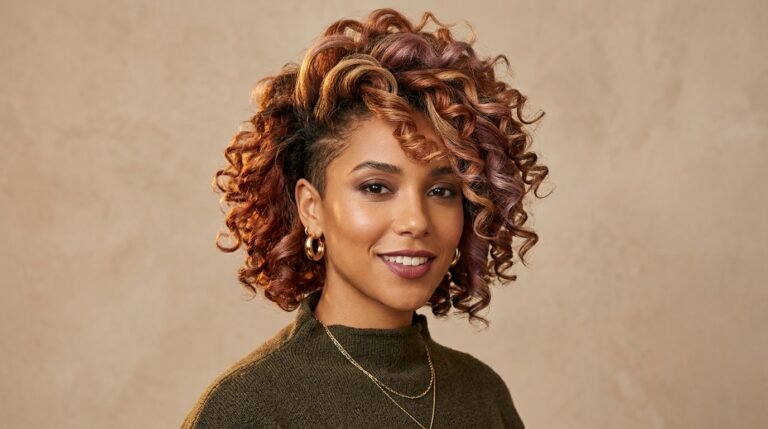
Colour is one of the more exciting ways to express personality through hair. The money piece is a fun, relatively low-commitment technique. It adds bright or contrasting highlights to the two front sections framing the face. That creates an instant colour statement without a full transformation. This year, money pieces show up in soft caramel, vivid pink, and electric blue alike.
The money piece stands out because it feels personal. A warm, natural honey tone reads very differently from a bold fashion colour. Both are equally valid choices. Each one says something specific about individual style. Trying the colour with clip-in extensions first is a low-commitment way to test it before booking a real appointment.
A conversation with a professional colourist is worth having first. This matters most for a first time going lighter or more vivid on dark hair. Doing a patch test before any hair dye is also worth it, not just the first time. Most permanent and many semi-permanent dyes contain a chemical called PPD. DermNet, a dermatologist-reviewed resource, explains that a small amount applied behind the ear, left for 48 hours, can reveal a reaction before it happens on the whole head. Darker dye shades generally contain more PPD than lighter ones.
Once the colour is in, a colour-protecting shampoo helps it last. A toning treatment suited to the specific shade keeps the money piece vibrant longer between salon visits. A monthly gloss refresh at the salon keeps the tone from turning brassy or dull between full colour appointments.
Final Thoughts
New hairstyles for teenage girls in 2025 are all about having fun. The goal is finding looks that feel genuinely exciting to wear. The sweet romanticism of the coquette half-up, the playfulness of the bubble ponytail, the bold self-expression of a colourful money piece. Whatever the choice, the most important thing is picking something that feels authentic rather than simply following the crowd.
The teenage years are one of the better times to experiment freely with hair. Most of these styles need no permanent commitment at all. That makes trial and error genuinely low-risk. Sports days, school photo days, weekend plans — each one is a fair reason to try something new. A quicker, sports-ready roundup of no-fuss options sits in this guide to gym-to-street hairstyles, for anyone splitting time between practice and everyday life.
Every style tried teaches something small about personal taste. That is worth more than getting any single look exactly right on the first attempt. A style that flops one morning is easy to fix by lunchtime.
Frequently Asked Questions
What are the easiest hairstyles for teenage girls to do at home? The coquette half-up, the bubble ponytail, the textured ponytail, and space buns are all genuinely easy. No special tools are needed. The butterfly clip updo is perhaps the fastest of all, taking under a minute.
Which hairstyles work best for school? Styles that keep hair neatly out of the face suit school days best. The textured ponytail, braided crown, sleek low bun, and messy French braid are all reliable options. They hold up through a busy day.
How can a new hairstyle be tried without cutting any hair? Nearly every style here needs no haircut at all. The coquette half-up, bubble ponytail, space buns, braided crown, and sleek low bun are pure styling techniques. Curtain bangs are the only cut-based option, and even those can be kept minimal.
Are these hairstyles suitable for all hair types? Yes. Every style here adapts to straight, wavy, curly, thick, fine, and natural textures. Natural and curly textures often look especially good in the braided crown and textured ponytail, since natural volume adds an extra dimension.
What hair accessories are genuinely worth having? A few soft scrunchies, a couple of large claw clips, an assortment of butterfly clips, some ribbon bows, and simple hair ties cover most styles here. Building this collection gradually means something suitable is always on hand.