Hairstyle 2026 for Black Girls That Celebrates Natural Beauty
Choosing a hairstyle for a Black girl in 2026 starts with honoring the hair exactly as it grows from the scalp, keeping it healthy and protected while celebrating it fully. Black hair needs no taming, straightening, or alteration to be beautiful — it already carries that on its own, and the styles below exist to make it visible and joyfully worn. Twelve of the most meaningful hairstyle options for Black girls in 2026 follow, each rooted in natural beauty.
The Defined Natural Afro
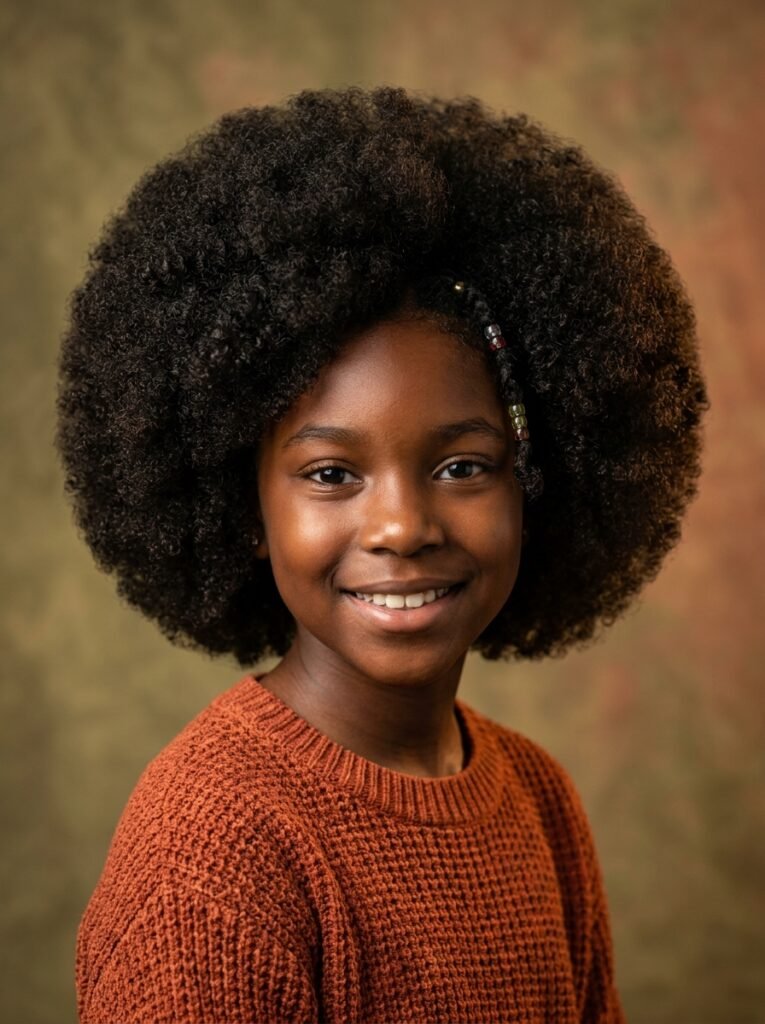
A defined natural afro celebrates the full volume and coil pattern of Afro-textured hair in its unaltered form. A well-shaped afro is not simply hair left to grow without direction — it’s a deliberately shaped style that honors each girl’s individual curl pattern and lets it take its own form.
Getting there depends on a consistent moisture routine: a rich leave-in conditioner applied section by section to freshly washed hair, a curl-defining cream to enhance the natural pattern, and a light sealing oil to finish. Drying naturally or diffusing on a low setting preserves that definition and keeps the coil texture even throughout.
Working with a natural hair specialist to shape the afro into a specific silhouette — a round globe, a high oval, or something softer and more relaxed — takes it from a good style to a genuinely personal one. Girls who wear their afro with confidence tend to carry themselves with a presence that says something real about their relationship to their own hair.
The Cornrow Styles
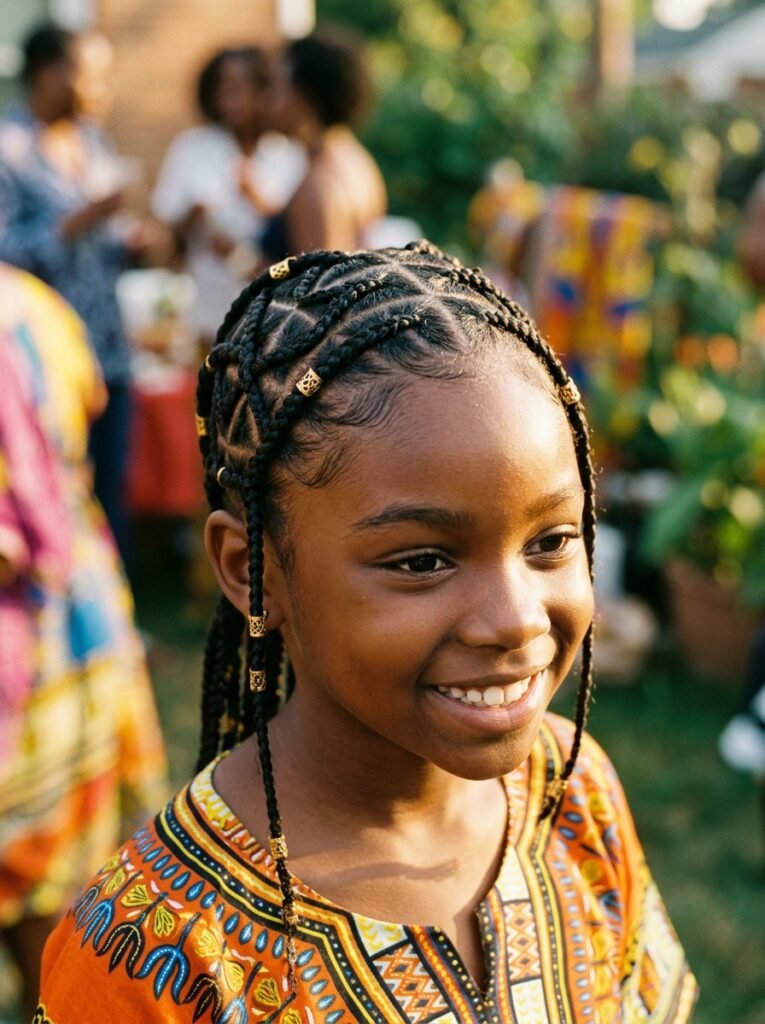
Cornrows carry deep roots in African hair culture, connecting a practical, aesthetic choice to a tradition of hair artistry passed down through generations and still evolving today. Whether worn in clean rows straight back or arranged in creative patterns, cornrows function as a form of art worn on the head.
The range of cornrow styles available now is considerable, and skilled braiders bring real creativity to the technique. Simple straight-back rows read clean and classic, suiting school days and family events alike. Curved cornrows following the head’s natural contours build a flowing, dynamic quality. Geometric patterns — zigzag parts, diamond formations, sculptural arrangements — show off real braiding skill.
Caring for cornrows means keeping the scalp moisturised with a lightweight braid oil or spray every two to three days, protecting the style at night with a silk bonnet, and avoiding tension that could stress the hairline. With proper care, cornrows hold their shape for two to four weeks — practical for an active school routine without daily styling.
The Bantu Knots
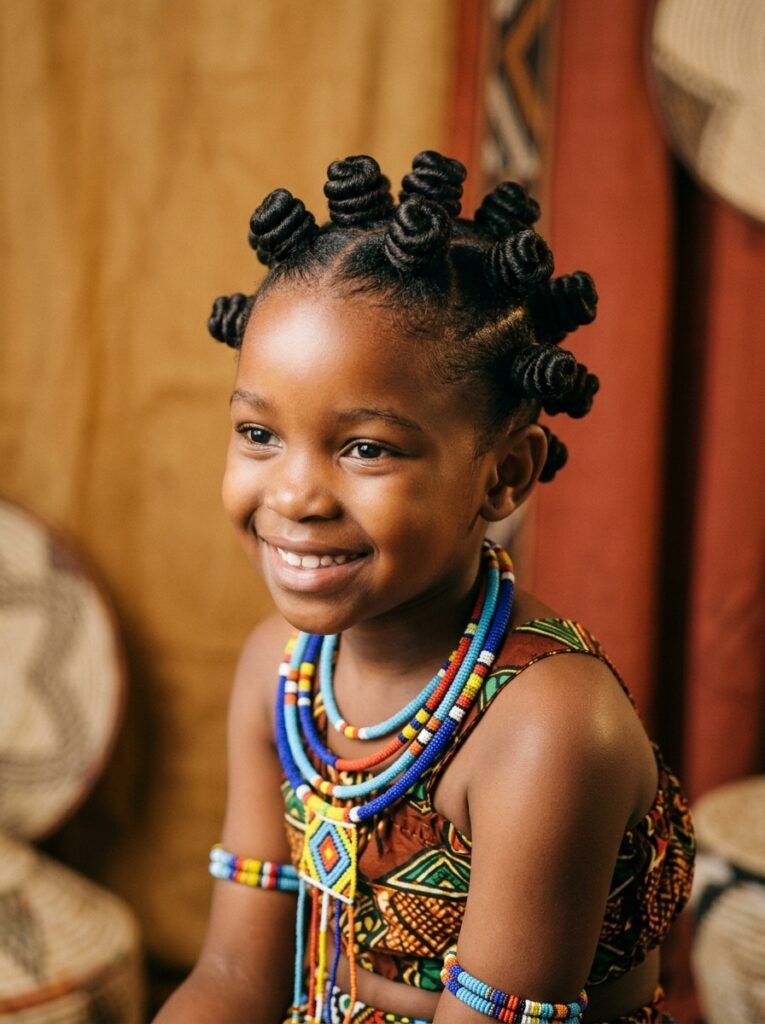
Bantu knots create round, spiral-shaped knots with a sculptural quality unlike most other natural styles. “Bantu” refers broadly to hundreds of ethnic groups across a wide stretch of Southern and Central Africa who speak Bantu languages, and historical accounts trace the specific knot style closely to the Zulu people within that broader group — wearing them connects to a centuries-old tradition rather than a single point of origin.
Creating them involves dividing the hair into sections, applying a moisturising styler, twisting each section tightly from root to tip, then coiling the twist around its own base into a compact knot secured at the tip. Smaller sections build more numerous, delicate knots; larger sections build fewer, bolder ones — both work, and the choice comes down to time and desired effect.
Bantu knots work as a complete standalone style for school or celebrations, or as a setting technique: left in until fully dry, then unraveled to reveal defined knot-out waves with no heat involved at all.
The Protective Box Braids
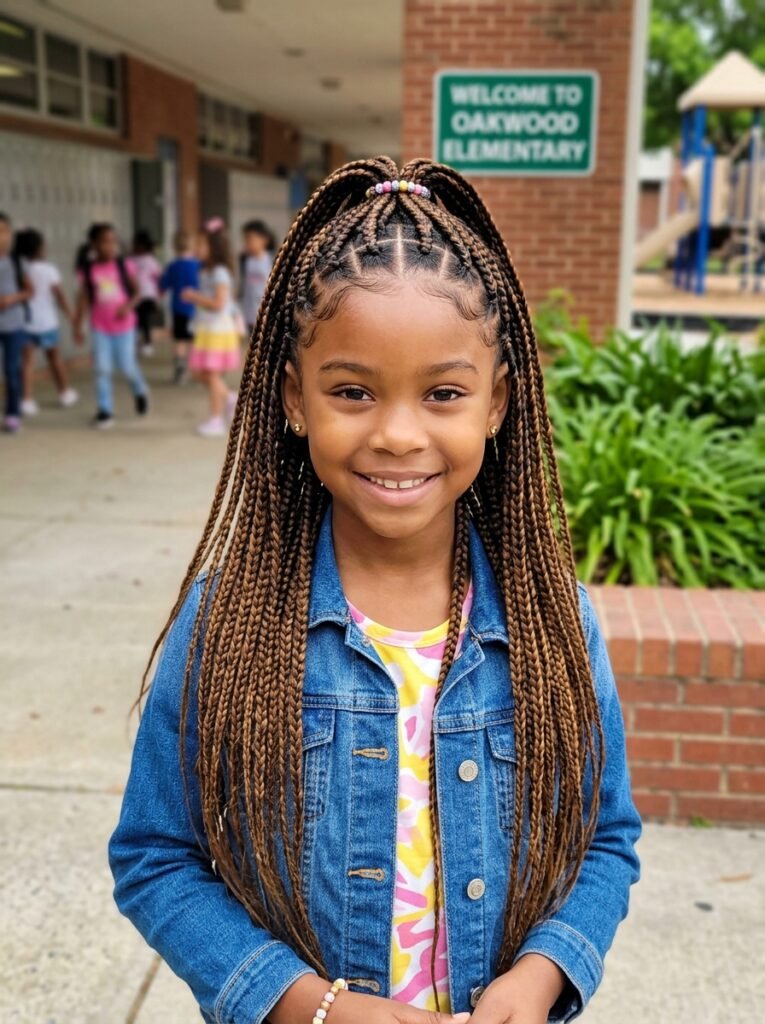
Box braids combine real protective benefit with versatility, and the clean, geometric parting behind each braid gives the style a precision that’s immediately recognisable. The range of arrangements possible from a single installation essentially provides several looks in one.
Knotless box braids — starting from the natural hair and gradually feeding in extension hair rather than beginning with a knot at the scalp — have become the more popular version, since they’re noticeably more comfortable, put less tension on the scalp and hairline, and lie more naturally against the head. A similar low-tension approach runs through this broader guide to protective hairstyles for natural hair. The comfort difference matters for active girls wearing braids through a full school day.
Colour personalises box braids further: warm honey and caramel woven through natural brown reads sun-kissed, rich burgundy and auburn make a bolder statement, and bright fashion colours like rose gold or lavender suit older girls after something more expressive.
The High Top Fade with Natural Curls
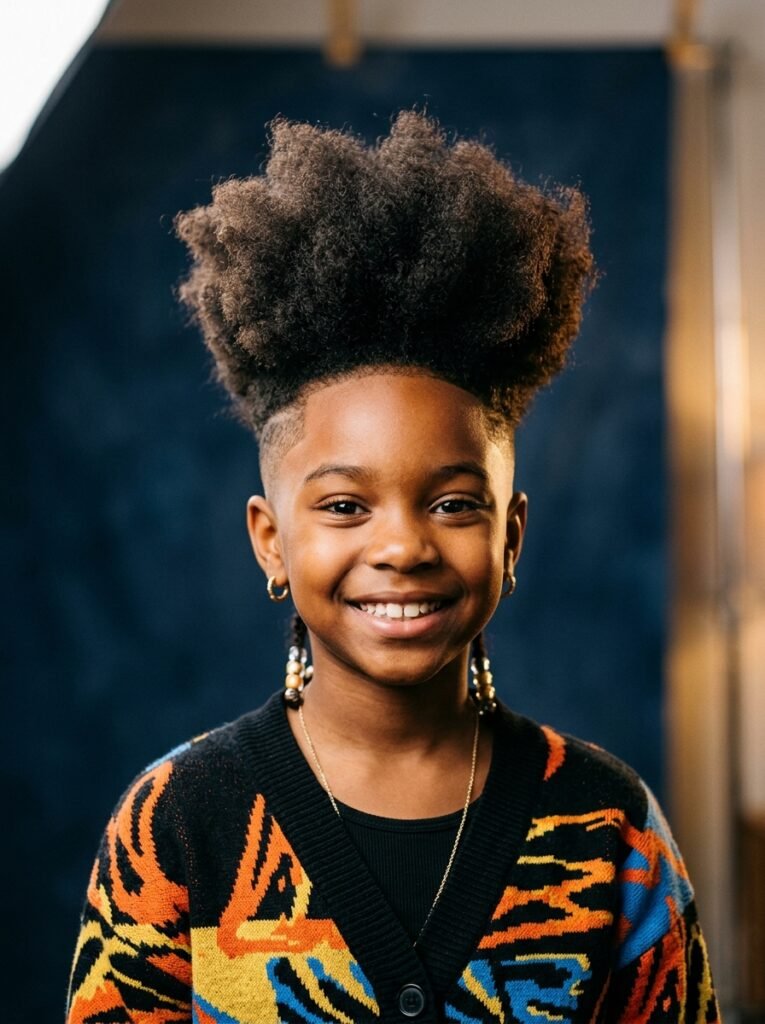
Close-cut sides and back create a clean foundation while natural curls at the crown grow upward into a full, voluminous top section, showing off the texture and density of Afro-textured hair directly. The contrast between the precise fade and the free volume above builds a shape that’s structured and organic at once.
This cut needs a barber or natural hair stylist who understands both fade technique and natural hair care, but the result carries a bold, confident energy that communicates real pride in natural texture.
Keeping it maintained means visits every three to four weeks to keep the fade clean, alongside a daily moisture and definition routine for the crown curls — a good leave-in conditioner and curl cream keeps them defined against the sharp line of the fade below.
The Twist Out with Volume
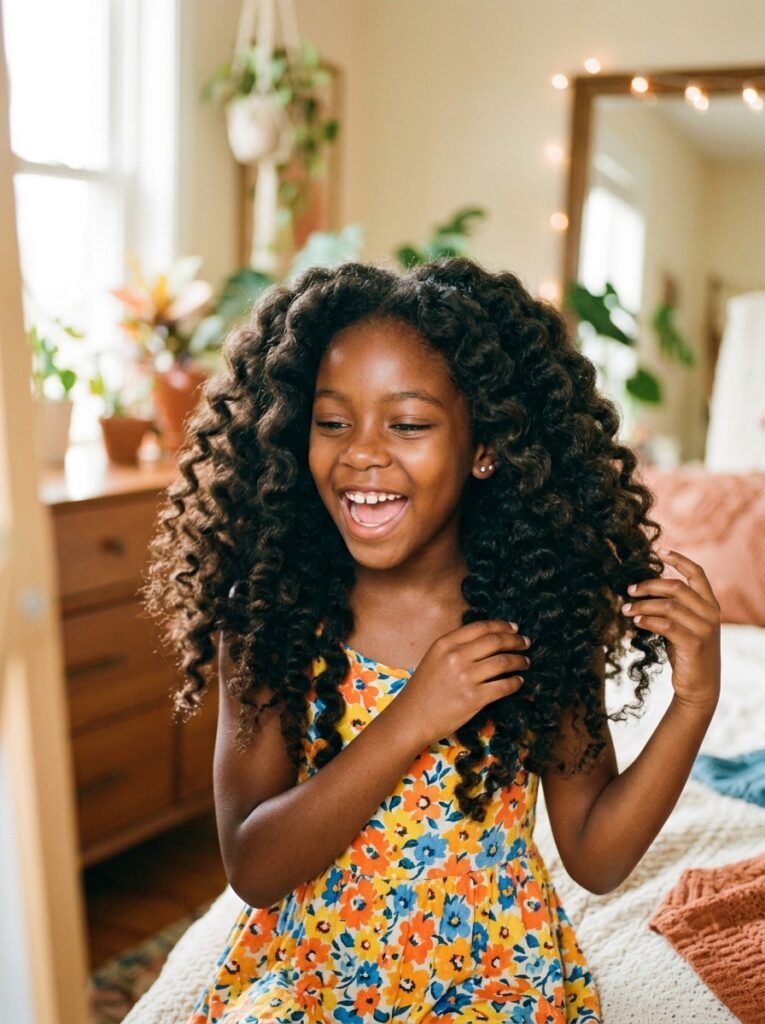
A twist out transforms tightly coiled natural hair into elongated, softly defined wave formations, revealing length that tight coils often conceal in their natural state. Many girls seeing their own twist out for the first time are surprised at how much length their hair actually holds.
The process: a rich leave-in conditioner and moisturising twisting cream on damp hair sectioned evenly, twisted consistently from root to tip, left to dry fully overnight, then gently unraveled with oiled fingers the next morning. Drying time matters — unraveling twists before they’re fully dry produces frizz rather than definition, so patience pays off here.
Volume comes from how the twists get separated: pulling each one apart from the bottom rather than the top builds the fullest wave with the least frizz. A light pick or afro comb used gently at the roots, only after all twists are unraveled, lifts the crown for that final full shape.
The Fulani Braids
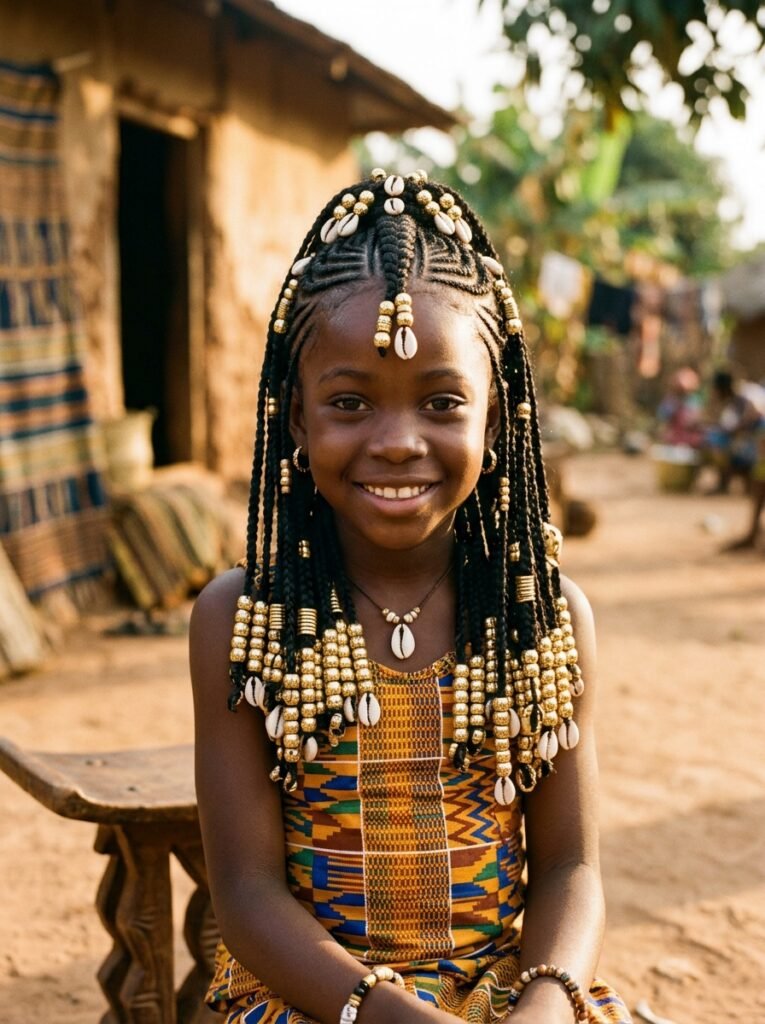
Fulani braids trace to the Fulani people of West Africa, carrying real cultural weight alongside their visual appeal. The classic style runs a centre or side braid from the front hairline to the back, cornrows along the sides, and loose braids falling from the crown — all decorated with beads, cowrie shells, and other ornaments central to the style’s authenticity.
The decorative elements carry the style’s distinctive character. Gold and silver metallic beads read luxurious. Cowrie shells add cultural weight and organic texture. Colourful seed beads, chosen carefully, make each set of braids specific to the girl wearing them.
As a protective style, Fulani braids keep the natural hair tucked away while looking finished throughout the wear period. Most sets hold for three to five weeks with proper care — a practical option for families after a style that looks good daily without much upkeep.
The Goddess Braids
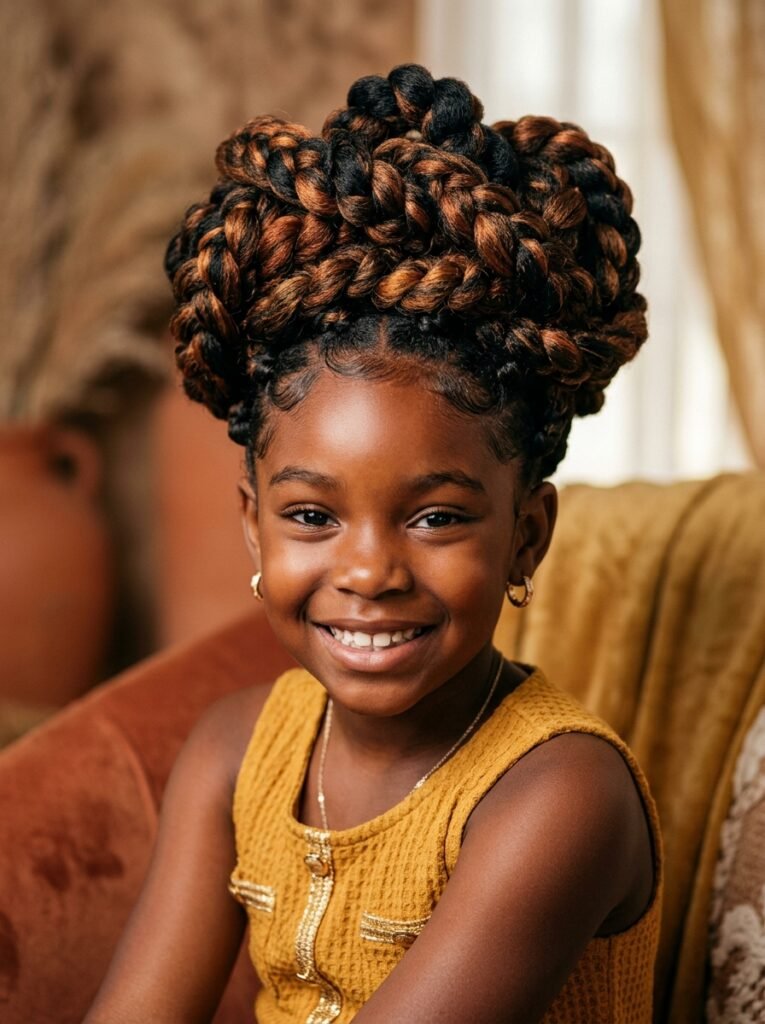
Goddess braids are large and chunky, sitting prominently on top of the hair rather than laid flat, and that deliberate boldness gives the style real presence. The sizeable individual braids command attention on their own.
Their versatility stands out: worn straight back, they read classic; arranged in a dramatic updo, formal; in a half-up half-down arrangement, relaxed and everyday. Each configuration reads as a complete style from the same braiding technique.
Colour works particularly well at this scale. A single lighter braid woven through darker ones creates an accent. Two-tone braids alternating natural colour with a vivid fashion shade build a striking pattern. All-over warm copper or honey tones read rich and dimensional in natural light.
The Natural Puff Updo
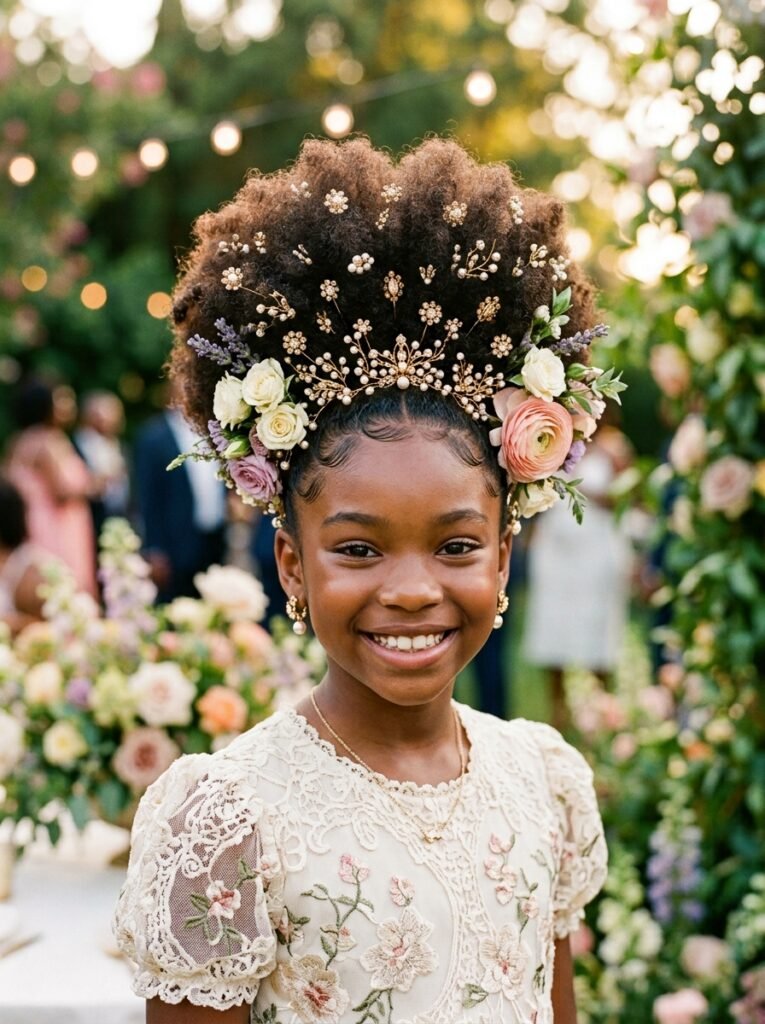
The natural puff updo takes the everyday natural puff and elevates it through thoughtful arrangement and accessories. Gathering the hair into a full, voluminous puff at the crown, then adding pins, flowers, or jewelled accessories around the base, builds something that celebrates natural texture while reading more occasion-appropriate.
The style adapts across hair lengths and curl types, since the puff’s volume and shape follow whatever density the individual girl’s hair naturally has. Very thick, densely coiled hair builds a large puff with real presence; medium density builds a fuller, rounder shape.
Gold jewelled pins scattered around the base read crown-like. Fresh flowers matched to an outfit lean romantic. Pearl pins or a single decorative comb at the side keep things classic. Each accessory choice shifts the whole personality of the same base style, which makes it easy to wear fresh for each occasion on a girl’s calendar.
The Loc Styles
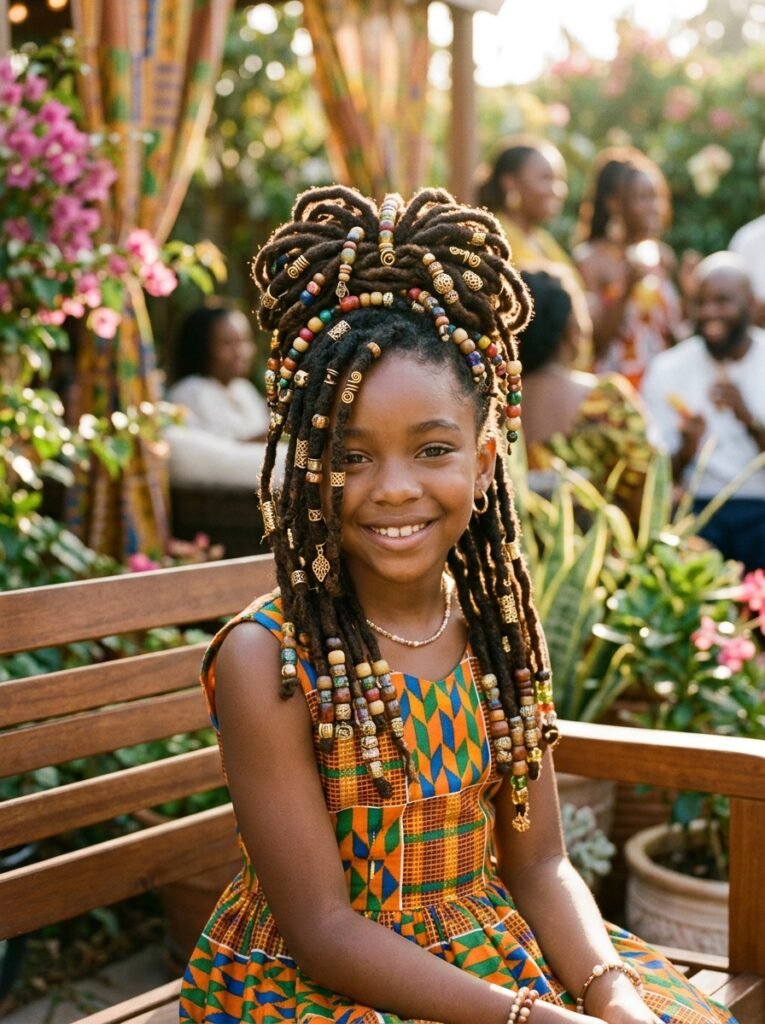
Starting locs is one of the more significant hair decisions a family can make together. Sisterlocks — very fine, precisely installed locks using a specific technique — offer one path; traditional locs that begin from natural coils and gradually lock over time offer another. Either way, the commitment grows into something increasingly personal over months and years.
Girls who wear locs often carry a particular rootedness that comes from a style that’s entirely their own and grows and changes alongside them. Every stage of the journey has its own character, from the newest baby locs just beginning to the mature, fully locked styles that carry years of growth.
Loc styles in 2026 range widely: high puffs made entirely of locs, braided or twisted updos, half-up styles that show off length and texture together, and free-flowing looks that let each loc express its own shape. Beads, gold accessories, or flowers added for special occasions bring in extra glamour without losing the cultural weight underneath.
The Twist and Curl
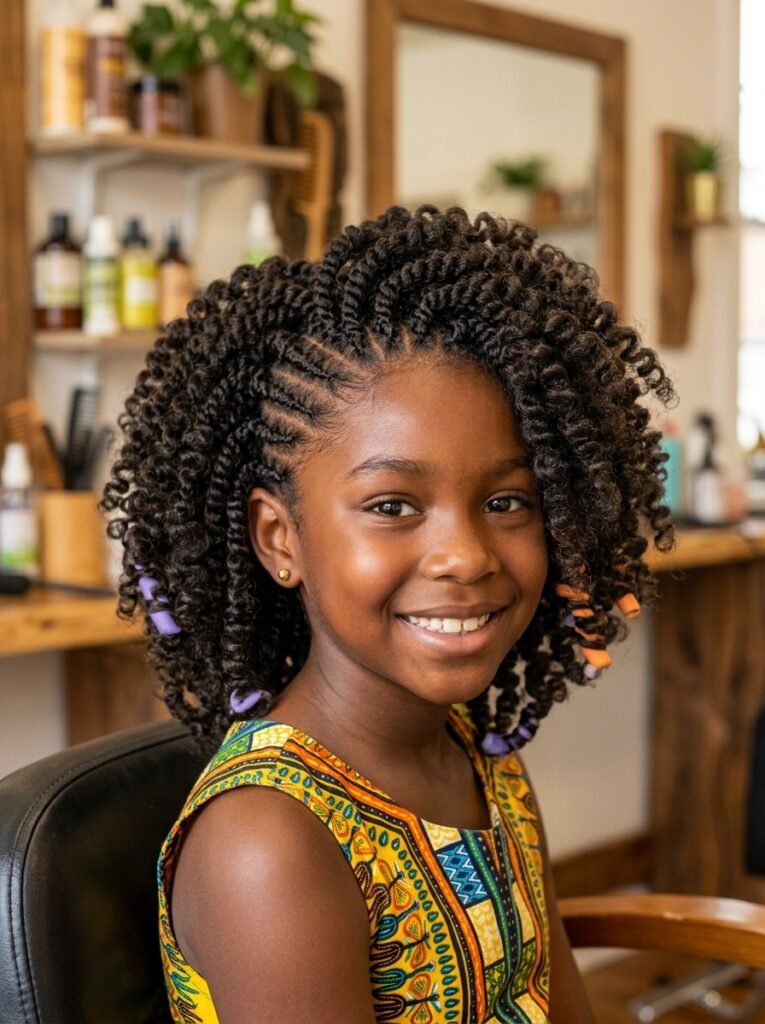
The twist and curl pairs the structure of twists at the roots with the looser expression of defined curls through the lengths. Two-strand twists set at the roots of each section, with the ends left to curl naturally or gently shaped with a flexi rod or perm rod, spring into a bouncy curl formation off the end of each twist.
The contrast between the clean, structured base and the freer curl at the end gives the style real depth — each twist-and-curl unit works almost like a complete look in miniature, and across a whole head the effect reads distinctly layered.
The style also evolves through its wear: sharp and defined right after styling, then more relaxed as the twists loosen over the following days. Eventually unravelling the twists completely over moisturised hair produces a full twist-out result, stretching one styling session into several distinct looks.
The Bold Beaded Style
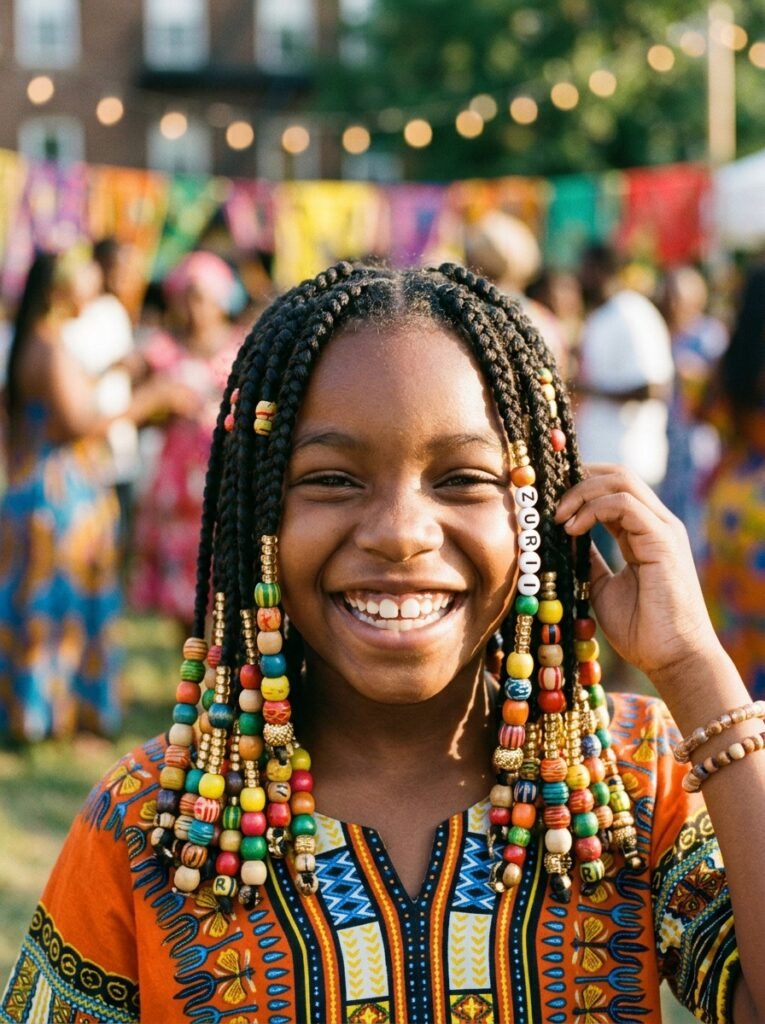
Colourful, clicking beads decorating braids, twists, or locs root the style deeply in African hair tradition while staying entirely current in how each girl customises it. Beads have adorned African and African-diaspora hair for thousands of years, and wearing them today is both an aesthetic choice and a form of cultural connection — the same tradition covered in this guide to hairstyles for girls with curly hair.
The range runs wide: tiny metallic seed beads in gold and silver for a delicate, jewelry-like effect; large, colourful wooden beads for a bolder statement; cowrie shells carrying real cultural significance. Alphabet beads spelling out a name or a favourite word add a personal touch many girls love choosing themselves.
Letting girls choose their own bead colours and arrangements gives them real ownership over the style and reinforces, early, that natural hair is a space for genuine self-expression — a small moment that tends to build lasting, positive associations with natural Black hair.
Final Thoughts
Hairstyles for Black girls in 2026 celebrate what makes Black hair distinctive and meaningful, each one rooted in real respect for the cultural traditions and artistry behind it. From the sculptural quality of a well-defined afro to the historical depth of cornrows and Fulani braids to the joy of a bold beaded style, every option here honours Black hair as it grows.
The most valuable thing any parent or caregiver can offer a Black girl, in relation to her hair, is a consistent message: her natural hair needs no comparison to any other standard to be considered beautiful. Every age-appropriate, culturally grounded style she wears reinforces that, building hair confidence and cultural pride that carries forward.