
Easy Curly Hairstyles for Beginners Who Hate Fuss
Learning to work with curly hair takes longer than most people expect. That is normal. Every curl pattern behaves differently. Figuring out what a specific head of curls actually wants takes real trial and error. Nobody gets it right on the first try.
The good news is that the learning curve is far gentler than it looks from the outside. Most of the frustration beginners feel comes from a handful of common mistakes. Nothing about curly hair itself is actually complicated. Fix those mistakes and most of the ten styles below become genuinely easy.
Each section below covers a simple style, plus the specific thing beginners tend to get wrong when trying it. Once those small things click, styling curly hair stops feeling like guesswork. It starts feeling like routine instead.
The Wash and Go
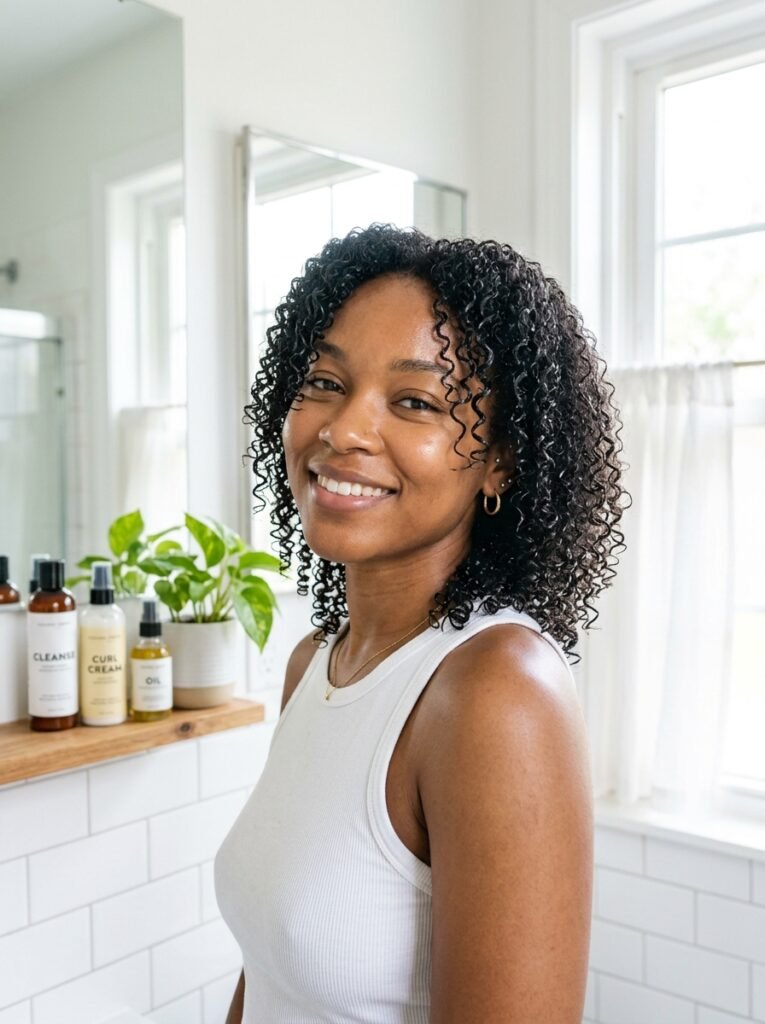
The wash and go is the natural starting point for anyone new to curly hair. Wash the hair, apply product to soaking wet curls, then air dry or diffuse. That is the entire technique.
The most common beginner mistake is applying product to damp or towel-dried hair instead of dripping wet hair. Product needs water to distribute evenly through the curls. Without enough water, it sits on top of some sections and misses others entirely. That unevenness is usually why a wash and go looks patchy on a first attempt.
A leave-in conditioner followed by a light curl cream or gel covers most curl types. Expect the first few tries to feel like guesswork. Product amounts vary a lot between curl patterns. Finding the right amount usually takes several wash days rather than one lucky attempt. Writing down what worked each time helps speed up that process.
The Pineapple Updo

The pineapple takes under a minute. Gather the curls loosely at the very top of the head. Secure with a soft scrunchie. Let the curls spill forward and outward.
This also works as an overnight protective step, which most beginners do not realise at first. Pineappling before bed, on a silk pillowcase, keeps curls from flattening or tangling while sleeping. A tight ponytail does the opposite, since it drags the curls down and crushes the shape overnight.
Second and third day curls usually pineapple better than first day curls. A little dried product actually helps the shape hold at the crown. A quick spritz of water in the morning refreshes everything. No full restyle is needed most days.
The Diffused Wash and Go
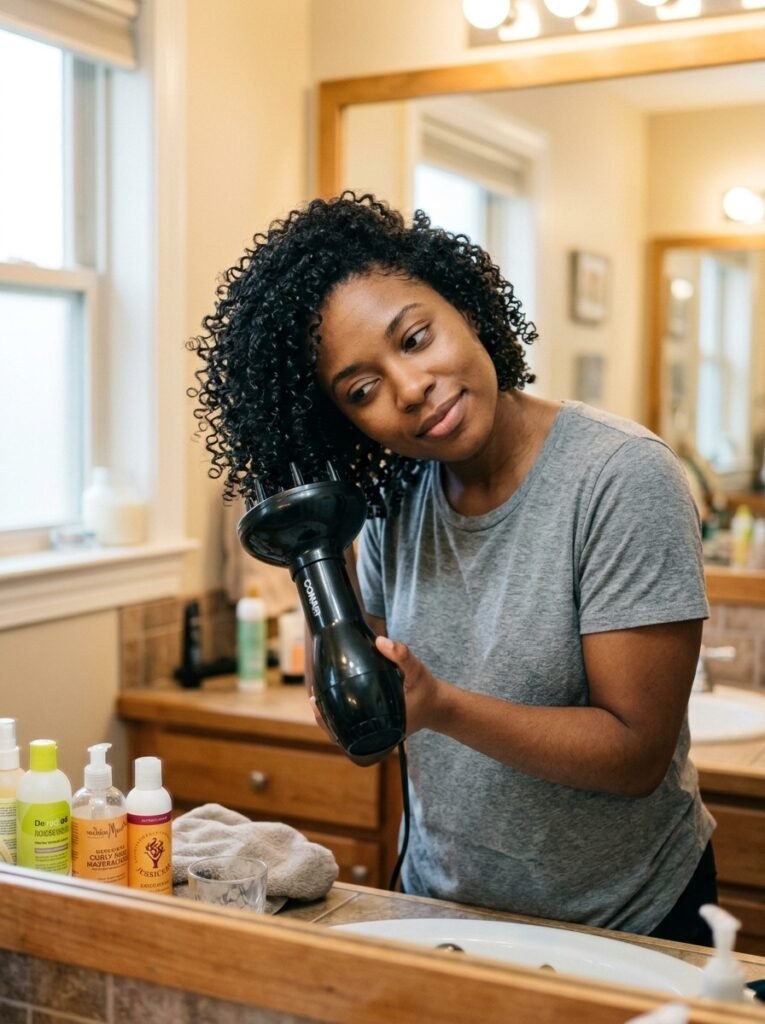
A diffuser is a simple attachment that spreads airflow gently over a wide area. It dries curls faster than air drying, without disturbing the shape the way a direct blast of air would.
The most common mistake here is moving the diffuser too much. Curls dry best sitting still in the diffuser bowl, not getting scrunched or agitated while still wet. Flip the head upside down, cup sections gently, and keep the heat on low to medium throughout.
Most shoulder-length curls finish in fifteen to twenty minutes this way. Stopping at around eighty percent dry and letting the rest finish on its own, rather than diffusing until bone dry, tends to produce softer results. Overdrying with a diffuser is an easy trap for beginners eager to speed things up.
The Half Up Half Down
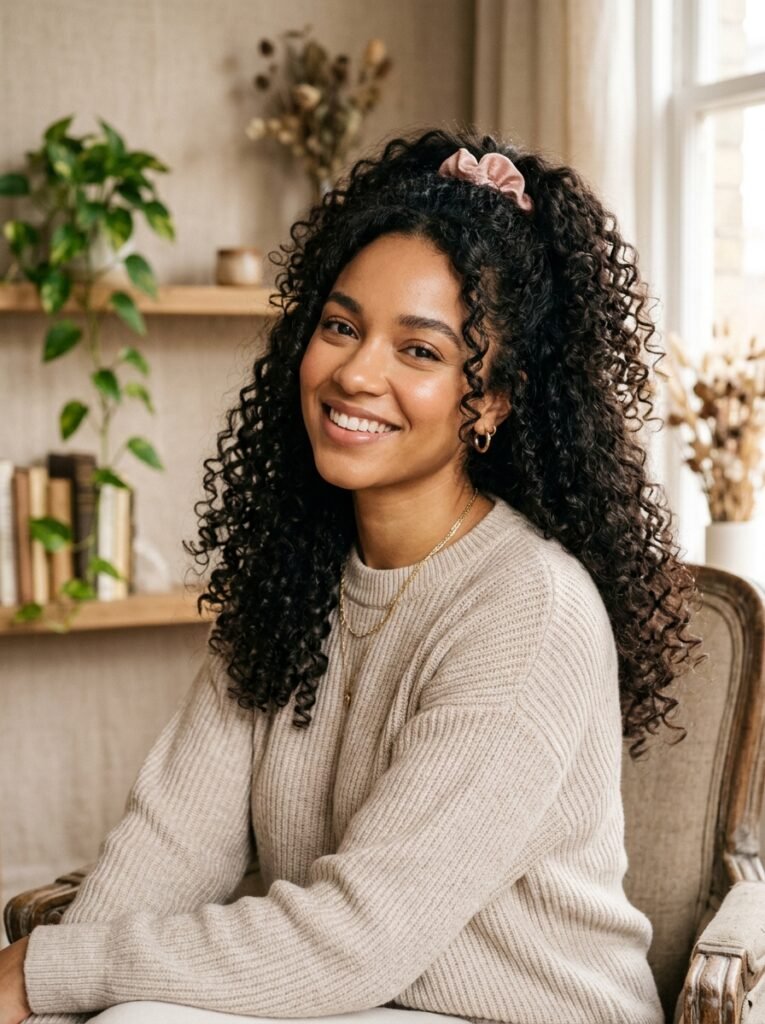
This style sits between a full wash and go and a full updo. Take the top section, roughly from temple to temple, and gather it at the back of the head. Secure with a scrunchie or claw clip. Let the rest fall naturally.
Beginners often pull this section too tight, which creates a stretched, flat look at the crown rather than the soft lift the style is meant to have. A looser gather, with a little volume left in the curls before securing them, looks more natural.
Once this basic version feels easy, small variations open up. A twist before securing adds detail. A ribbon instead of a scrunchie changes the mood entirely. A broader look at these variations sits in this guide to curly hairstyles for 2026.
The Low Curly Bun

A low bun works especially well on second or third day curls, when the texture has settled enough to gather easily. Secure at the nape with a soft tie, then wrap the length loosely around the base rather than pulling it tight.
The instinct to smooth everything down and pin every loose piece works against this style. A few escaped curls around the face are part of the look, not a mistake to fix. Fighting that instinct is usually the hardest part for beginners, not the technique itself. Letting go of that need for perfect neatness takes practice.
This bun also holds up well through a full day, since the wrapped, looser structure has some give rather than sitting under constant tension.
The High Curly Ponytail
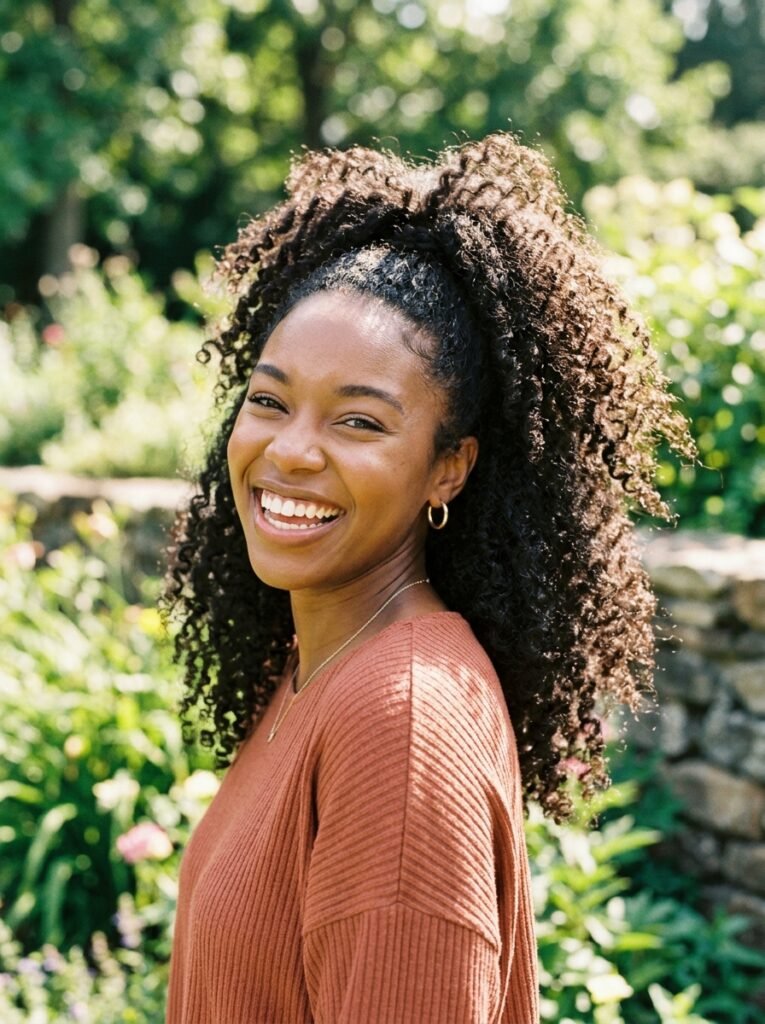
Gather the hair as high as feels comfortable. Secure with a thick, snag-free hair tie. That single word, snag-free, matters more than it sounds. A regular elastic can grip and break curly strands at the point where it wraps.
Wrapping a small section of curl around the base hides the tie and finishes the look. This step is optional but makes a noticeable difference for very little extra effort.
Bigger, more voluminous curl days genuinely suit this style best. There is no need to smooth anything down first. More volume simply reads as more impact here. Saving this style for a big curl day, rather than a flatter one, tends to give the best result.
The Claw Clip Updo
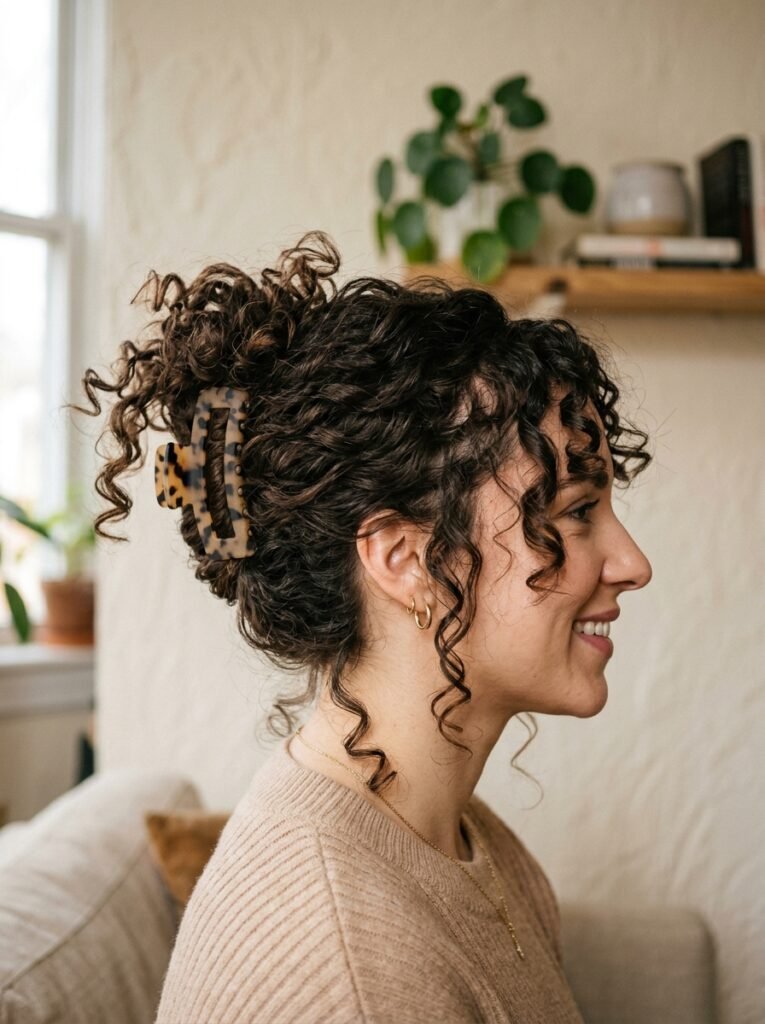
A large claw clip creates an instant updo with almost no technique required. Gather the curls loosely, twist gently a couple of times, and clip the gathered hair in place.
This is genuinely one of the more forgiving styles for a beginner. There is no wrong way to do it. A slightly messy result still looks intentional, and that low failure risk makes it a good style to practice confidence on, not just technique. Trying it a few times in a row builds comfort quickly.
A few clips in different sizes cover most situations. A large clip handles full updos. A small one is enough to pin back just the face-framing pieces on a day when the rest of the hair stays down.
The Twist Out
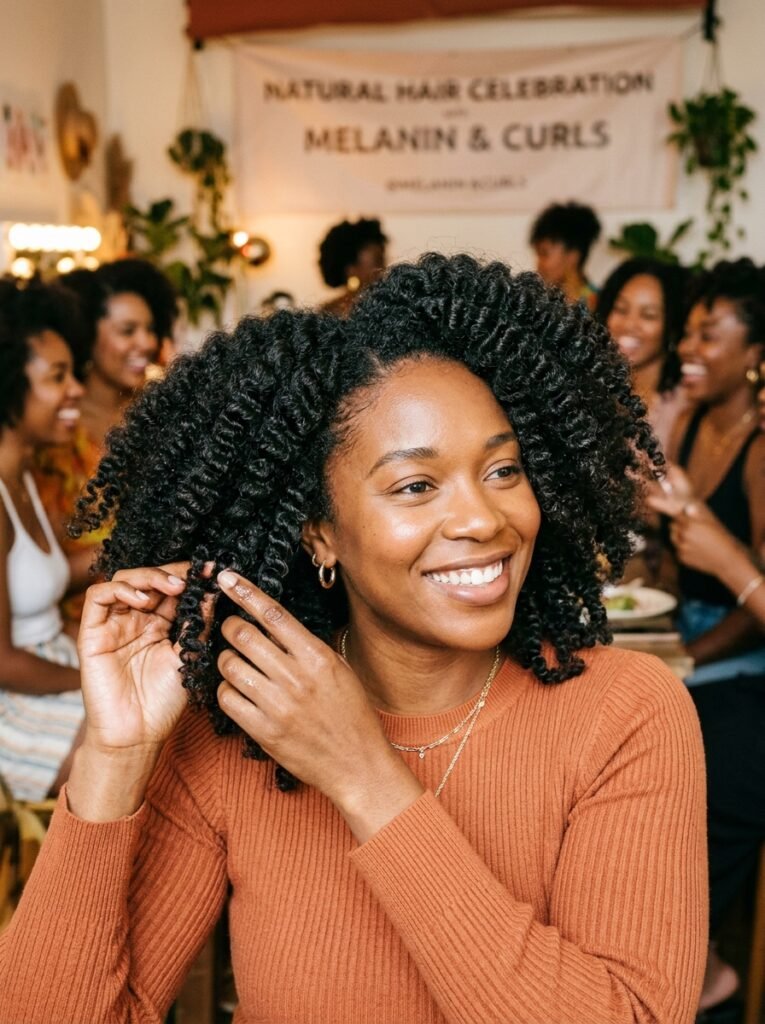
A twist out divides damp hair into sections, twists each one from root to tip, and unravels the twists once fully dry. The result is elongated, defined curl formations that read differently from the natural pattern underneath.
Starting with larger sections makes this far more approachable for a first attempt. Fewer twists means less time, and the result comes out softer and more forgiving of uneven technique than tighter, smaller twists would.
The most common beginner mistake is unravelling before the twists are fully dry. Damp twists unravel into frizz rather than definition. Letting them dry overnight, and separating each one gently with oiled fingers the next morning, gets a far cleaner result. Rushing this one step undoes most of the earlier effort.
The Scarf or Headband Style
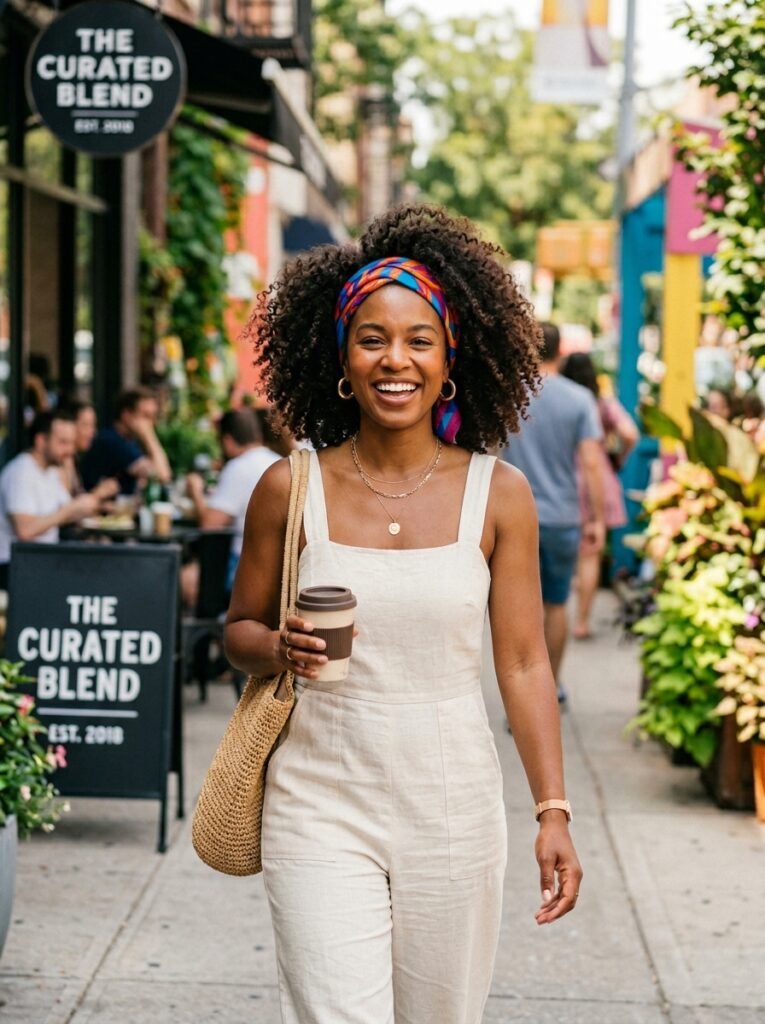
A scarf or headband can turn a basic wash and go into something that looks deliberately styled, without touching the hair itself at all. This is the lowest-effort option on this whole list.
Fabric choice matters more than most beginners expect. Silk, satin, or soft cotton glide against the hairline. Rougher fabrics catch and cause frizz right where the accessory sits, which defeats the purpose of wearing one.
The same scarf works several different ways. Tied at the crown, it reads retro. Wrapped around a ponytail, it looks polished. Left loose with the ends trailing, it reads more relaxed. One accessory, several looks. That versatility makes a good scarf worth owning even before the rest of a curl routine feels settled.
The Protective Low Ponytail
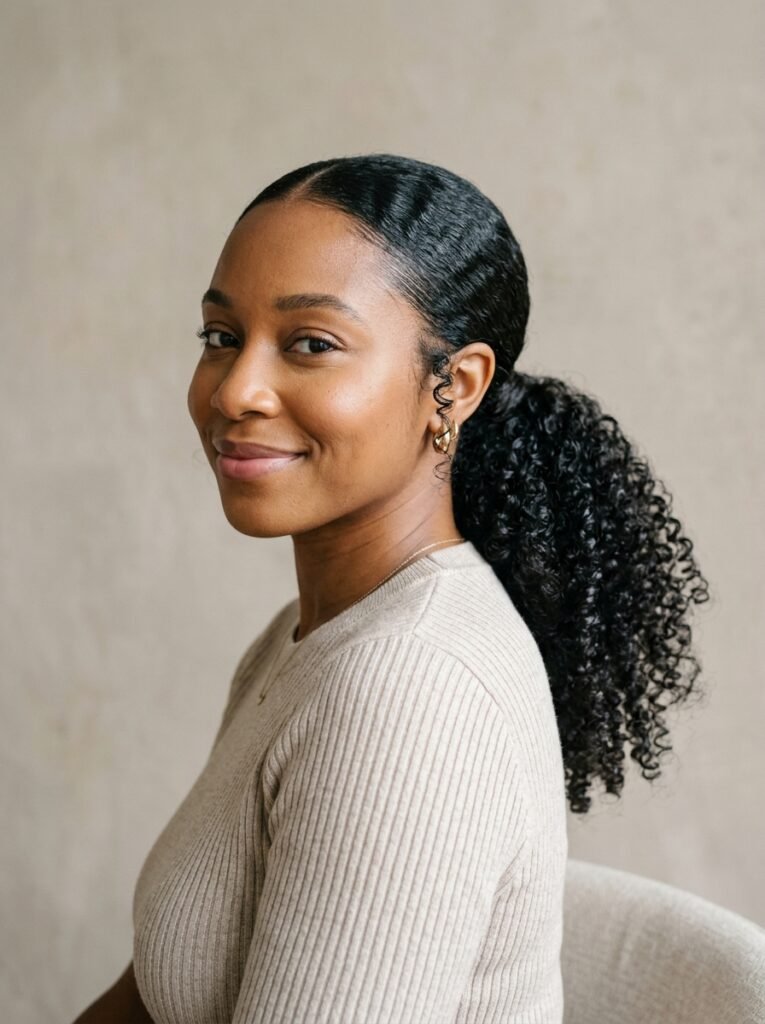
A low ponytail at the nape, secured with a soft, snag-free tie, reduces the daily tension that causes breakage over time. This is a good default style for anyone still building a healthy curl routine.
The American Academy of Dermatology’s guidance on curly hair care recommends detangling with fingers or a wide-tooth comb, rather than a brush, and avoiding brushing curls once they are dry. That same gentleness applies to gathering hair for this style.
Smoothing the front sections back with a little water or leave-in, using hands rather than a brush, gives the front a neat line. The curl texture at the back stays soft and natural. That contrast is what makes the style read as intentional rather than simply pulled back in a hurry.
Final Thoughts
None of these ten styles require advanced skill. Most come down to one or two specific habits, and the biggest obstacle for a beginner is usually a small technique detail rather than anything genuinely difficult. A missed step, once identified, is usually easy to fix on the very next wash day.
Picking two or three styles from this list and practising them consistently, rather than trying all ten at once, tends to build confidence fastest. Curl patterns respond differently to the same technique, so a little patience during the first few wash days makes a real difference. Small wins add up faster than they seem to at first. For more ways to keep curls looking their best once the basics feel comfortable, this guide to making voluminous curls that won’t fall flat covers the next stage.
Frequently Asked Questions
What products does a beginner actually need? A sulfate-free shampoo, a moisturising conditioner, a leave-in conditioner, and a curl cream or light gel cover most of what these styles need. Adding more products gradually, once these basics are understood, works better than starting with a large collection.
How often should curly hair be washed? Two to three times a week suits most curl types. Washing too often strips natural oils and causes dryness. Washing too rarely causes buildup that weighs curls down. Starting at twice a week and adjusting from there works well.
Why does styling curly hair cause frizz? Frizz usually comes from too little moisture, or from touching the hair too much while it dries. Applying product to soaking wet hair, then leaving it alone until fully dry, solves most frizz issues on its own.
Do these styles work on second-day hair? Yes, and several actually work better on second-day curls than fresh ones. A light spritz of water, a small amount of curl cream scrunched in, and either a quick diffuse or a few minutes of air drying refreshes most of these styles well. There is rarely a need to start completely from scratch.
How long does it take to feel confident with curly hair? Most beginners feel comfortable with two or three go-to styles within four to six wash days of regular practice. The learning curve is real but short, especially starting with the simpler styles on this list.