How to Do a Messy Bun: A Step-by-Step Guide
Few hairstyles have earned their place in the daily rotation quite like the messy bun. It manages to look pulled-together and barely-tried at the same time, which is a rare combination and part of why it turns up on so many heads. Once the basic method clicks, it tends to become a reflex rather than a project.
The appeal rests on a small contradiction: imperfection is the goal, not the flaw. Where a sleek bun punishes every stray hair, the messy version rewards them. That takes the pressure off, since there is no single correct shape to chase.
What follows breaks the whole thing down into clear, ordered steps. Long hair, short hair, or anything between all end up within reach, provided the sequence is followed and the finished bun is allowed to stay a little undone.
Why Everyone Loves the Messy Bun

It helps to understand why the style has lasted before getting into the how. The messy bun sits right on the line between casual and considered, which is what lets it travel from a slow Sunday to a full workday without looking out of place. Very few looks stretch that far.
Practicality is a large part of it. The style keeps hair off the face, holds up through a workout, and disguises a day or two of unwashed roots without complaint. That makes it a natural default for anyone whose schedule rarely sits still.
It also flatters across hair types and ages, and it dresses up or down depending on the occasion. A low, smooth version reads as polished enough for an office, an idea explored further in this guide to work-appropriate hairstyles, while a looser take suits a weekend with no real effort at all.
Prep Your Hair First
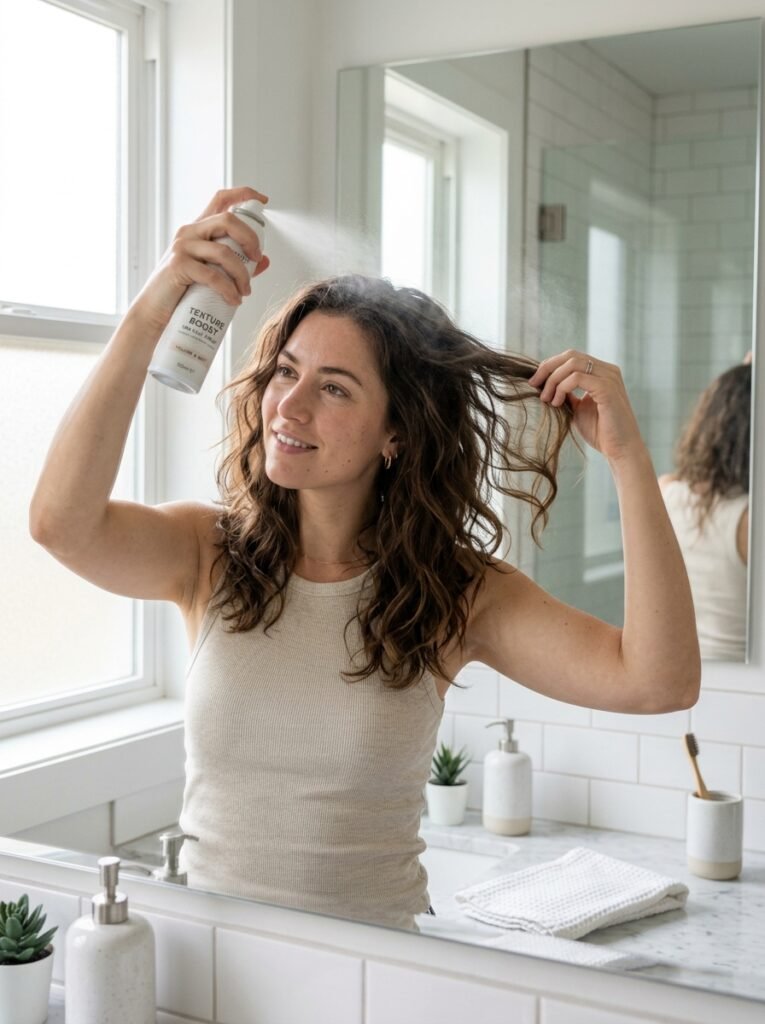
The quality of a messy bun is often decided before a hair tie ever comes out. A minute of preparation smooths the whole process and improves the result, which makes this the step least worth skipping.
Here is the part that surprises people: the style holds better on second-day hair than on freshly washed strands. Clean hair tends to be too slippery and fine to grip itself, so it slides loose. A bit of natural texture, by contrast, catches and stays put.
Freshly washed hair is not a dealbreaker, though. A spritz of dry shampoo or texturizing spray adds the grip that day-old hair would have on its own, faking that lived-in texture in a matter of seconds.
Gather the Right Tools
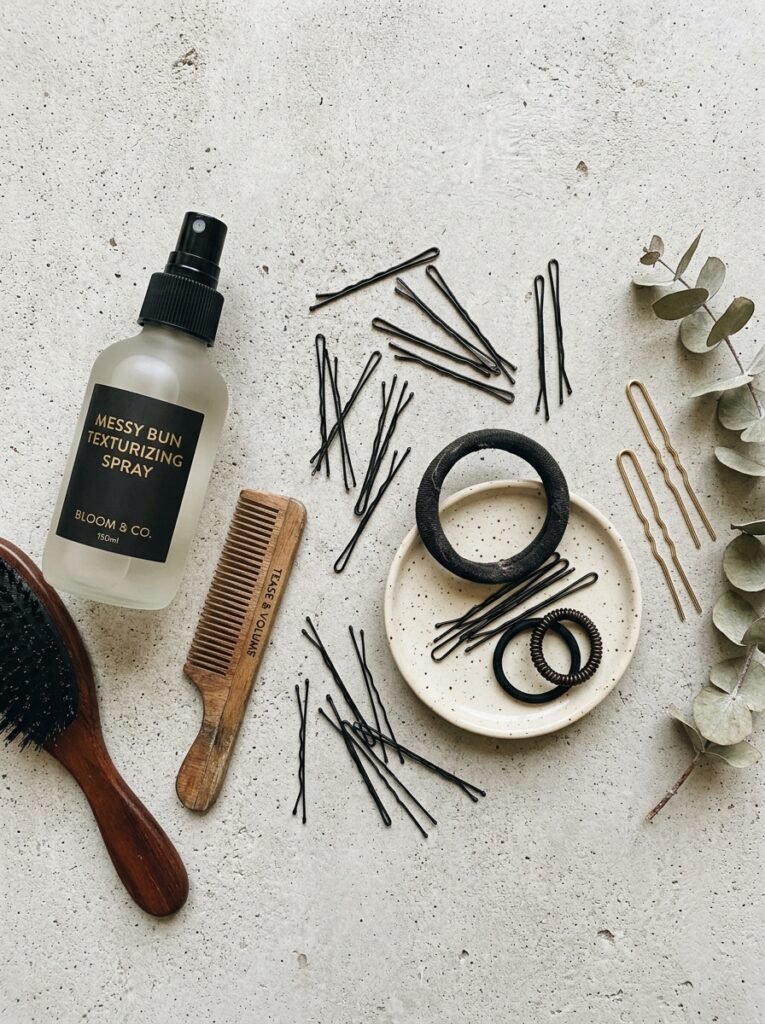
The messy bun asks for very little, which is a fair share of its charm. A few basics on hand make the process smoother, so it is worth pulling them together before starting rather than hunting mid-style.
The core kit is short: a decent hair tie, a handful of bobby pins, and a set of fingers. A texturizing spray or dry shampoo rounds it out, as covered above. With those within reach, nothing interrupts the flow halfway through.
A brush is optional, and skipping it actually builds in extra messiness. Fingers keep the texture natural and undone where a brush would smooth it away. The result ranks among the lowest-effort styles around.
Decide on Your Bun Placement
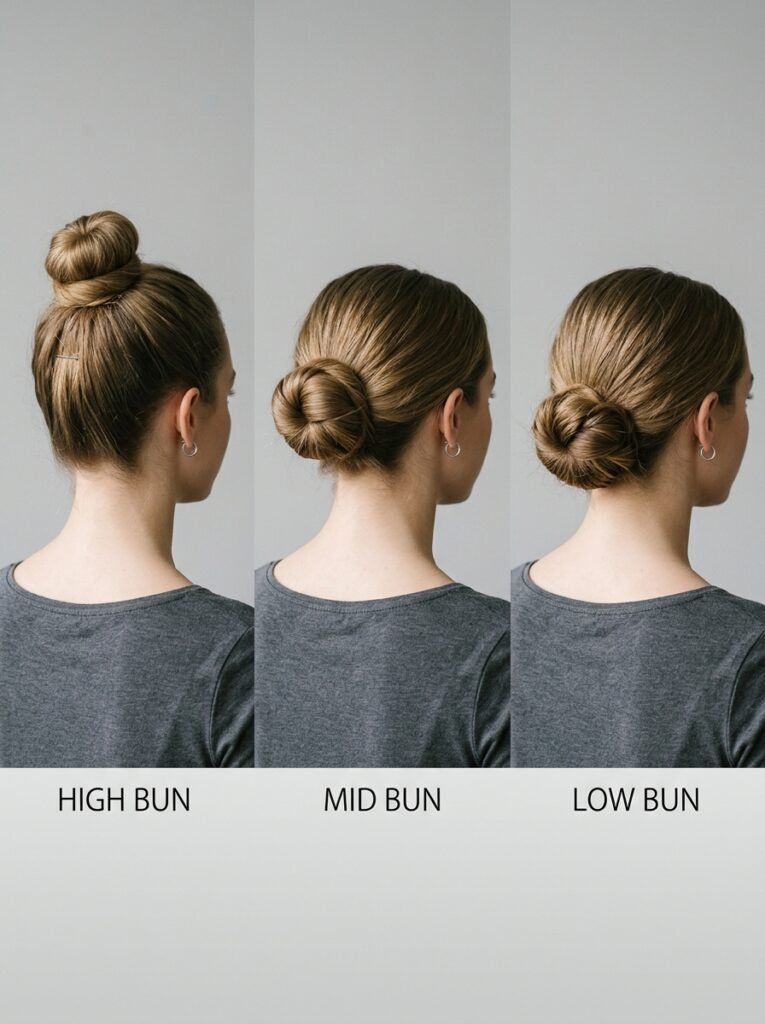
Placement changes the entire character of the bun, so it is worth a moment’s thought before any hair is gathered. The same technique reads differently depending on where the bun lands, and that one choice does more work than it appears to.
A high bun sits at the crown and comes across as playful and youthful. A low bun rests at the nape of the neck and reads softer and more refined. A mid placement splits the difference, landing in relaxed, everyday territory.
None of the three is wrong, which leaves mood, outfit, and occasion to settle it. Matching the height to the rest of the look is what makes the finished bun feel deliberate rather than accidental.
Gather and Secure Your Hair
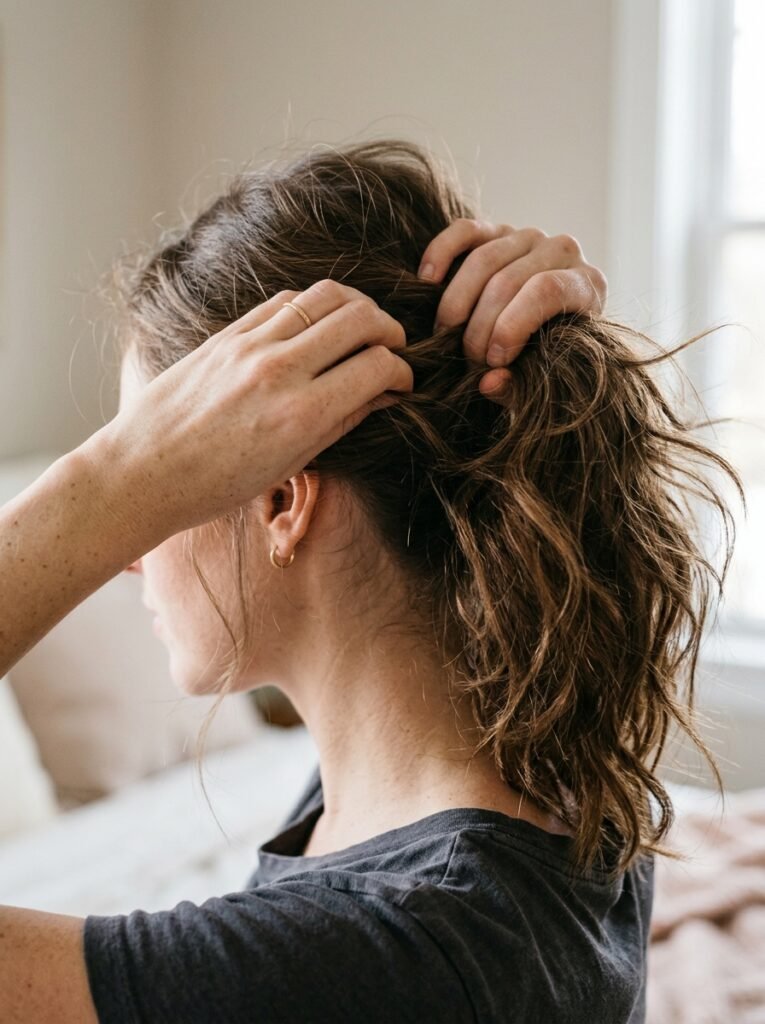
This is where the bun actually begins. The first move is to gather the hair into a ponytail at the chosen spot, sweeping it up with fingers instead of a brush so the texture stays intact.
A sleek, flawless ponytail is the wrong target at this stage. A few loose pieces left around the face are exactly what the finished look needs, since they keep the end result soft rather than severe.
Once gathered, the ponytail gets secured with a hair tie, with one adjustment: on the last pass through the tie, the hair is pulled only halfway, leaving a loop. That half-ponytail becomes the base the rest of the bun is built on.
Twist and Wrap
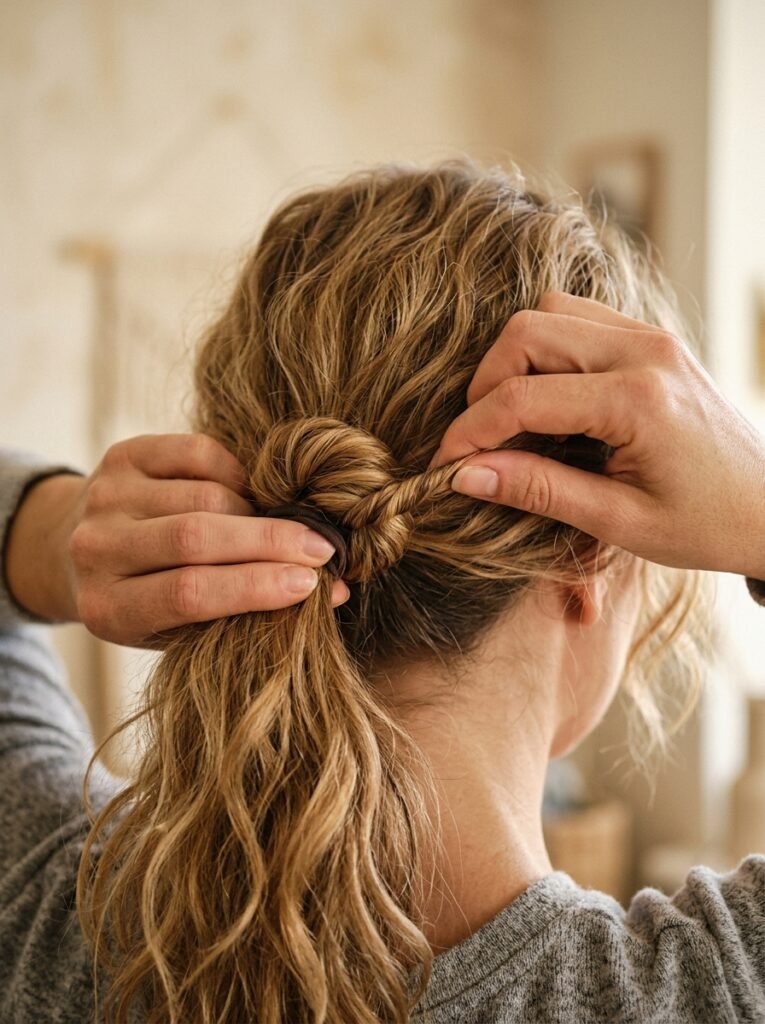
With the base set, the bun itself takes shape. The loose tail gets a gentle twist, turning it into a soft rope that is easy to wind into place.
That twisted section wraps around the base of the ponytail, kept loose and relaxed rather than pulled tight. Beyond the softer look it creates, a loose wrap is also easier on the hair: the American Academy of Dermatology notes that tightly pulled updos can strain the hairline over time, so a relaxed bun has more going for it than appearance alone.
There is no need to force it into a perfectly round or even shape. A slightly lopsided, organic form is the actual goal, so a little imperfection during the wrap is welcome rather than a mistake.
Pin Everything in Place
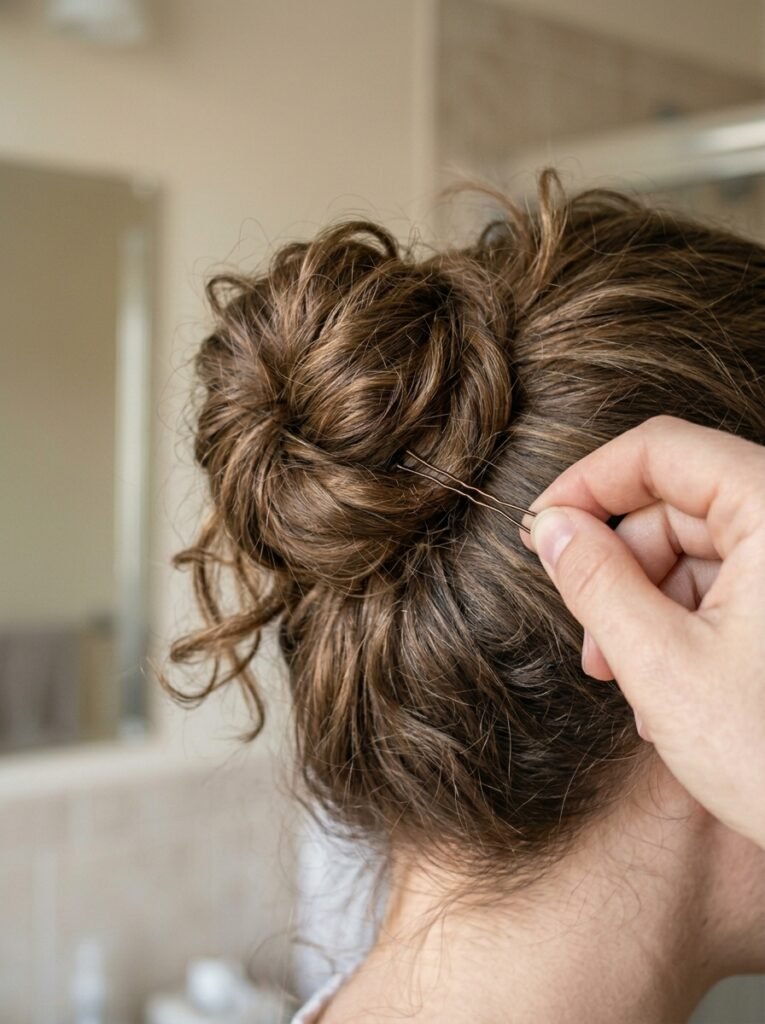
A shaped bun still needs securing if it is going to survive the day. This is the moment the bobby pins earn their place, tucking and holding the loose ends so nothing unravels.
Slid in at angles around the bun, the pins hold best, and tucking them under the hair keeps them out of sight. Done that way, the bun stays anchored with no visible hardware giving the method away.
The number of pins comes down to the hair itself. Thicker hair usually needs a few extra to feel secure, so the count is worth adjusting until the bun sits comfortably and holds.
Pull and Loosen for Texture
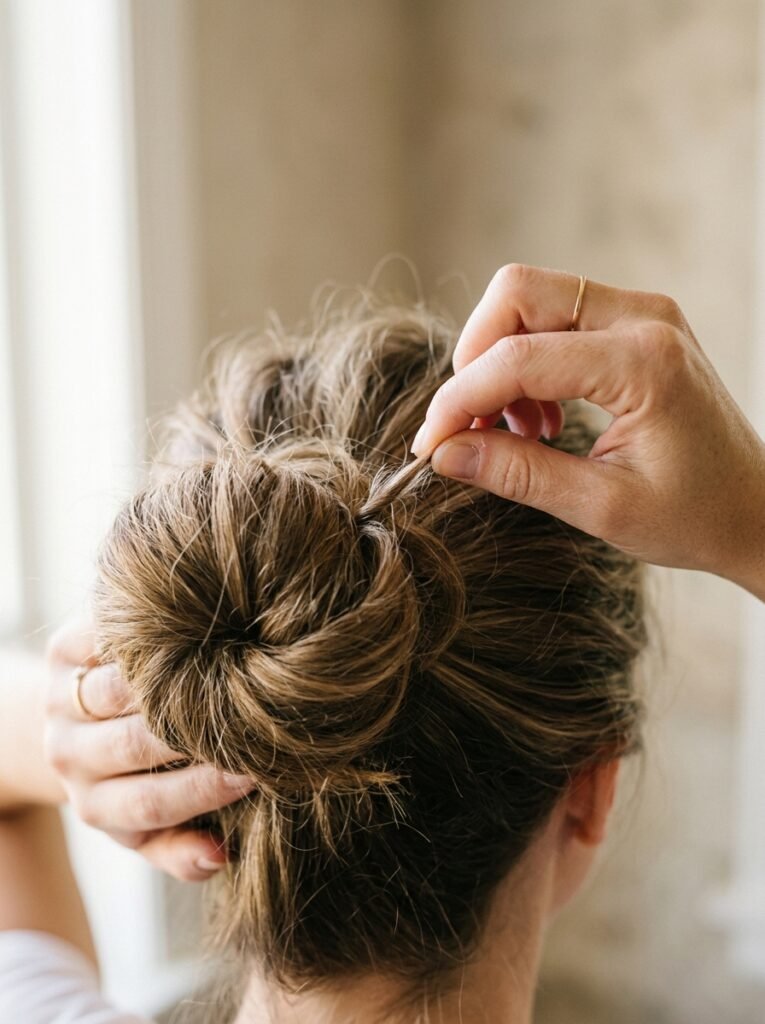
This is the step that turns a plain bun into a messy one. Gently pulling and loosening the shape is what creates the undone quality the whole style depends on, and it is where the look really comes together.
Small sections of the bun get a light tug to puff it outward, and loosening the hair around the crown adds volume and softness up top. The payoff is a bun that looks fuller, softer, and pleasantly imperfect.
A light touch matters here, since too much pulling drags the whole thing loose. A little goes a long way, so it is better to work slowly toward that relaxed shape than to rush it.
Frame Your Face

A flattering messy bun lives or dies on its face-framing pieces. Pulling a few strands loose around the face softens the look and does more for it than the bun itself sometimes does.
A couple of pieces tugged free at the front and around the ears is usually enough, and any layers or bangs can simply be left to fall on their own. The face ends up gently framed, and the whole style reads as more finished.
Those loose pieces work either straight or with a quick curl added for softness. A slight wave around the face leans romantic, and that small flourish tends to lift the entire look.
Set It in Place
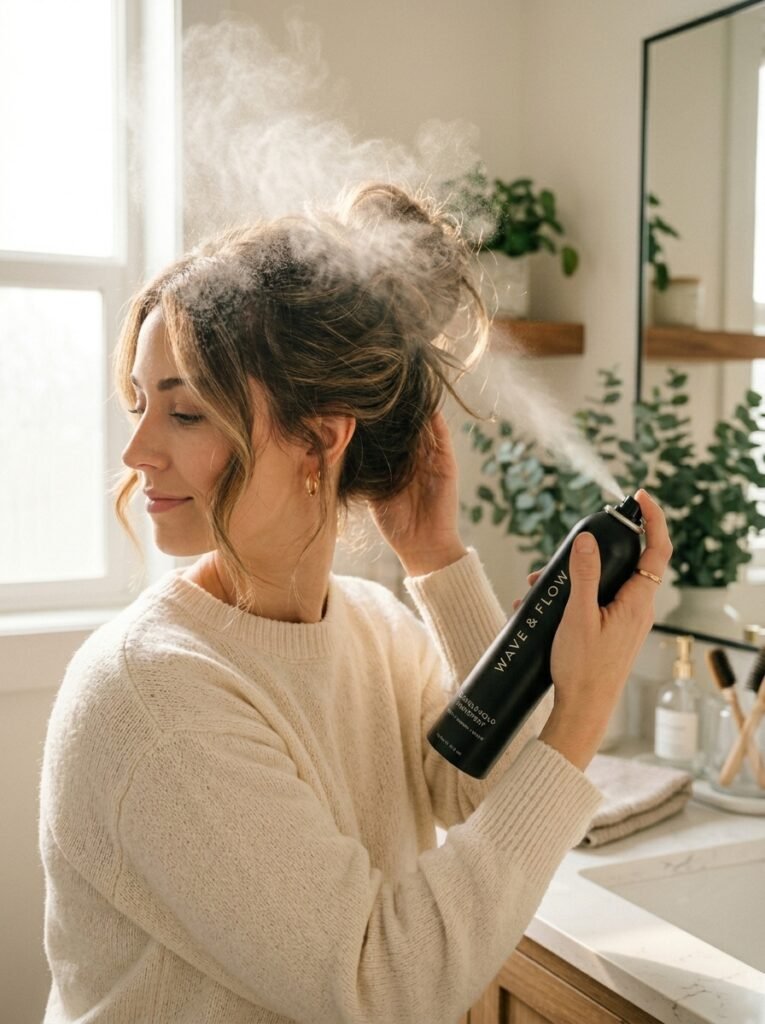
The bun is nearly finished, but a setting step keeps it that way. A quick mist of hairspray locks everything down and protects the effort from a few hours of movement.
A light pass over the bun and the face-framing pieces is all it takes, ideally with a flexible-hold spray so the hair still moves naturally. That keeps the finish soft instead of stiff or crunchy.
When hairspray is not on hand, a little more dry shampoo covers the same ground. It adds grip and keeps flyaways in line, holding the bun’s fresh look for hours.
Adapt It for Different Hair Types
Part of what keeps this style so widely worn is how easily it adapts. Nearly every hair type can carry a messy bun with a small tweak or two, which is a big reason it turns up across such a range of low-maintenance hairstyles.
Fine hair benefits from a generous amount of texturizing product for grip and volume, while thick hair tends to want a sturdier tie and a few more pins to stay put. Either way, the same basic method holds up regardless of what it is working with.
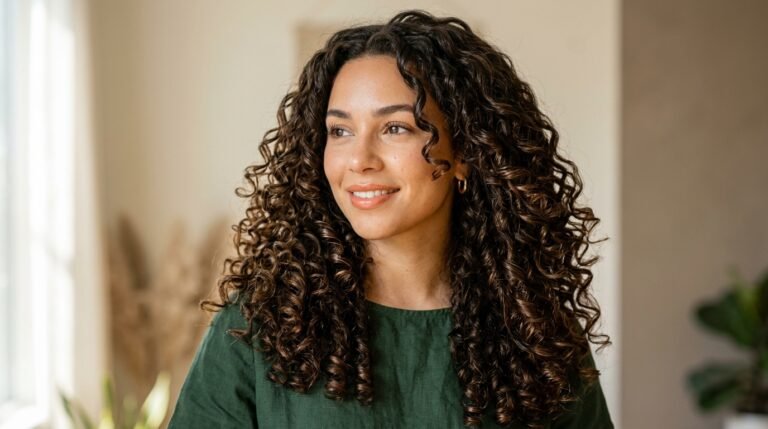
Curly hair fits in without any trouble. Gathering the curls loosely and letting their natural texture do the work is often all it takes, which is proof enough that the messy bun really does stretch to suit everyone.
Troubleshooting Common Problems
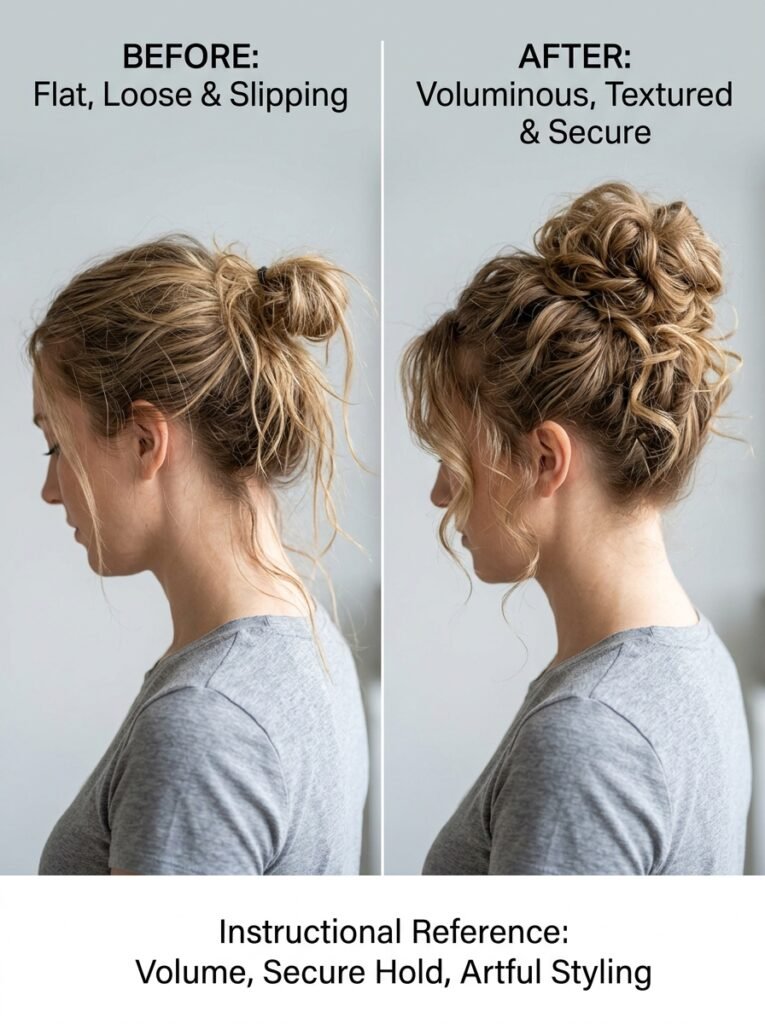
Sometimes a messy bun simply refuses to cooperate, and that is normal rather than a sign of doing it wrong. A few quick fixes cover the usual snags and save a fair amount of frustration.
A bun that keeps sliding out is often the result of hair that is too clean and slippery, which texture spray or dry shampoo tends to resolve on the spot. A bun that looks too neat is the opposite problem, solved by pulling a few more pieces loose.
When a bun feels heavy or droops, raising the placement usually helps, since a higher position sits more securely and lifts the whole shape. Most complaints come down to one of these small adjustments.
Final Thoughts
Taken together, the steps here show how little a good hair day actually requires. A bit of prep, a few twists, and some careful loosening are enough to land the look reliably, which takes most of the intimidation out of it.
A few practice runs on an unhurried day tend to pay off, since the method gets faster and more instinctive with repetition. Before long the bun comes together almost without thought.
The core idea is worth holding onto: imperfection is the point, not a shortfall. Chasing a flawless finish works against the style, while leaning into its undone, slightly different-every-time character is exactly what makes it work.
Frequently Asked Questions
Is a messy bun better on clean or dirty hair? Slightly dirty or second-day hair works best. Clean hair is often too slippery to hold the bun securely, so a bit of texture from dry shampoo or product makes a real difference.
How can a messy bun be made to look fuller? The trick is gently pulling and loosening the bun once it is pinned. Tugging out small sections puffs it up and adds volume, and a texturizing product applied beforehand helps thinner hair look fuller still.
Why does a messy bun keep falling out? Usually the culprit is hair that is too clean and slippery. Texture spray or dry shampoo adds grip, and using enough bobby pins at the right angles keeps the bun secure.
Does a messy bun work with short hair? It does, though a few extra bobby pins tend to be necessary. Shorter hair suits a lower, smaller bun best, so pinning any loose pieces and leaning into a slightly tinier, softer shape is the way to go.
What tools are needed for a messy bun? Very little, which is part of the appeal. A hair tie, some bobby pins, and a set of fingers are the essentials, with a texturizing spray or dry shampoo as a helpful bonus.