How to use a hair mask: a simple guide to deep conditioning
A hair mask is one of the easiest ways to give dry, rough or tired hair a boost of moisture. Think of it as a richer conditioner you leave on longer, usually once a week, to soften and smooth your hair. This guide explains what a hair mask actually does, how to use one step by step, how often to use it and how to pick the right kind for your hair. You will also see the common mistakes that make masks less effective.
A hair mask is a rich, deep conditioning treatment you leave on longer than regular conditioner to add moisture, softness and shine. Use one about once a week, applying it from mid-length to the ends of clean, damp hair, then rinse well. Dry, damaged and curly hair benefit most.
![Woman applying a creamy hair mask to the lengths of her damp hair in a bright bathroom] Caption](https://aurahairstyle.com/wp-content/uploads/2026/08/Woman_applying_hair_mask-765x1024.jpeg)
What is a hair mask?
A hair mask is a rich, deep conditioning treatment for your hair, made to add more moisture than an everyday conditioner. The ingredients are usually more concentrated, and you leave the mask on for longer, often several minutes up to half an hour, so it has time to soak in. People use hair masks to soften dry hair, smooth frizz and make strands easier to manage. You can buy them ready-made or make simple versions at home.
Most masks focus on moisture, while some add protein to help strengthen weak or damaged hair. A mask is really the weekly deep-treatment step in a fuller routine, so it works best on top of good everyday habits. If you want the complete picture of washing, conditioning and heat protection, our guide to a simple hair care routine covers the basics that a weekly mask builds on.
Hair mask versus regular conditioner
A hair mask and a regular conditioner do similar jobs, but a mask is richer and stays on longer. Everyday conditioner is made to be applied and rinsed within a minute or two, mainly to detangle and smooth after shampooing. A mask has more concentrated conditioning ingredients and sits for several minutes to give hair a deeper dose of moisture. You do not need both in the same wash. On mask days, the mask replaces your regular conditioner.
What does a hair mask do?
A hair mask adds moisture, softness and shine, smooths the surface of the hair and makes it easier to detangle and style. As the mask sits, its conditioning ingredients coat the strand and help the outer layer, the cuticle, lie flatter. That is what leaves hair feeling softer and looking shinier, and it also helps cut down on frizz and static. The American Academy of Dermatology notes that conditioners in general help moisturize and detangle hair, and a mask is simply a richer, longer version of that.
It helps to be realistic about what a mask can and cannot do. A mask improves how your hair looks and feels, and regular use keeps dry or rough hair in better shape. It cannot permanently repair badly damaged hair, undo split ends or change your natural texture. Think of it as steady maintenance and moisture, not a one-time repair.
How do you use a hair mask?
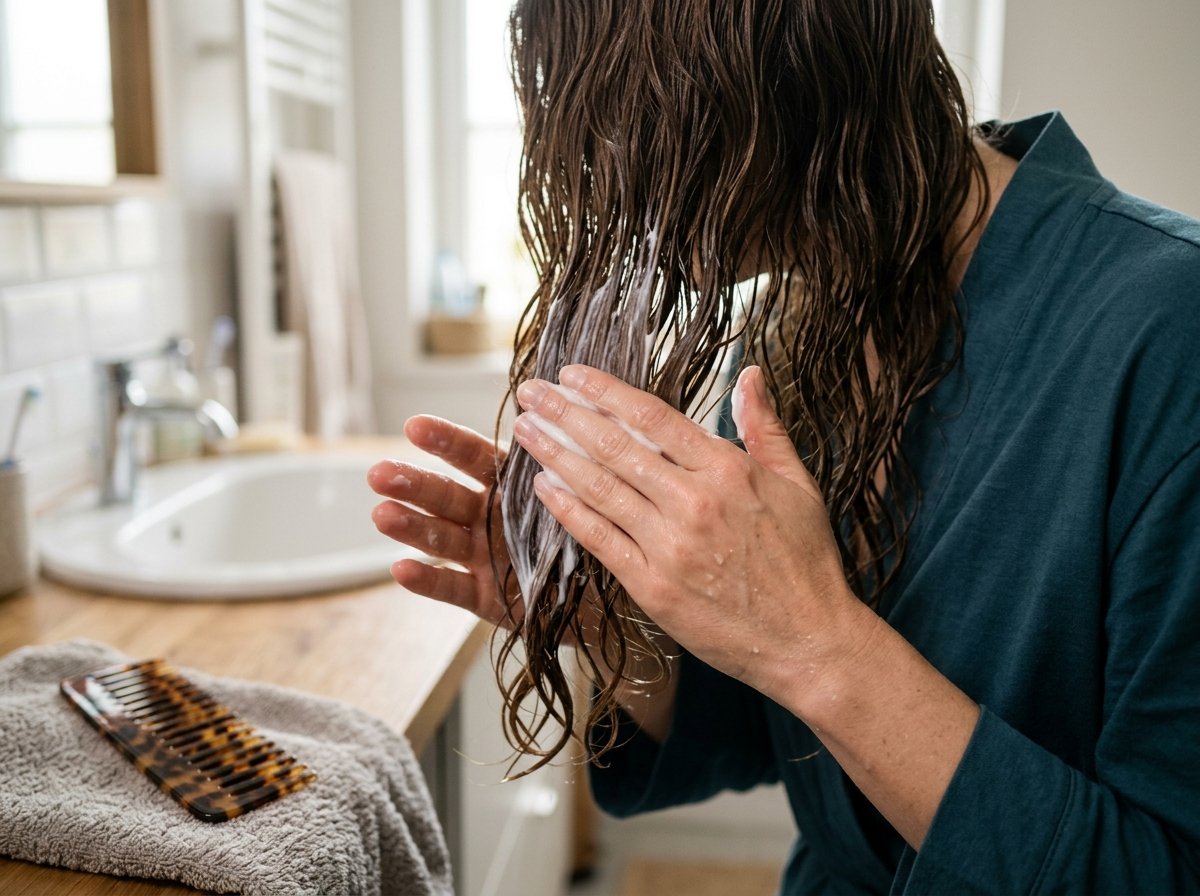
Using a hair mask is simple: apply it to clean, damp hair, leave it on, then rinse well. Start by shampooing as usual, then gently squeeze out the excess water so your hair is damp rather than dripping, since a soaking-wet head dilutes the mask. Skip your regular conditioner on mask days.
Here are the basic steps:
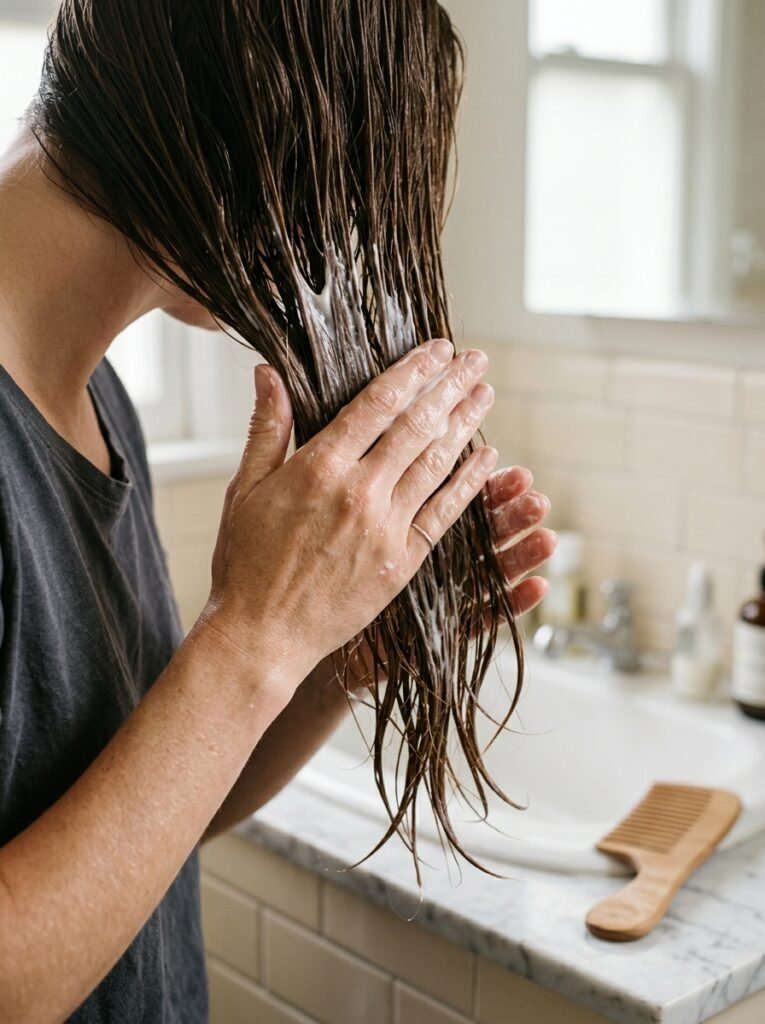
- Apply the mask from about mid-length to the ends, where hair is oldest and driest. Keep it off your scalp and roots unless the product says otherwise.
- Comb it through gently with a wide-tooth comb so every strand is coated.
- Leave it on for the time on the label, usually around five to twenty minutes.
- Rinse thoroughly with lukewarm water until the water runs clear.
The American Academy of Dermatology suggests keeping conditioner mainly on the ends for fine or straight hair and along the full length for dry or curly hair, and the same idea applies to masks. A shower cap or a warm towel over your hair while the mask sits can help it absorb.
How often should you use a hair mask?
Most people do well using a hair mask about once a week, then adjusting based on how their hair feels. Once a week is a good starting point for normal to slightly dry hair. Very dry, curly, coily or damaged hair may like a mask once or even twice a week, while fine or oily hair usually needs one less often, maybe every couple of weeks, so it does not get weighed down.
Let your hair guide you rather than a strict schedule. If your hair feels soft and looks healthy, keep doing what works. If it feels heavy, limp or greasy at the roots, you are probably masking too often or using too much product. Still feels dry and rough, you can mask a little more often or switch to a richer formula. A weekly mask slots easily into most routines without much extra effort.
How to choose the right hair mask for your hair type
The right hair mask depends on your hair type and what your hair needs most, usually moisture, strength or both. Moisturizing masks add softness and hydration and suit most people, while protein masks help strengthen weak, over-processed or breakage-prone hair. Many hair types do best with mostly moisture and only occasional protein, since too much protein can leave some hair feeling stiff or brittle. Here is a simple guide by type.
Dry or damaged hair
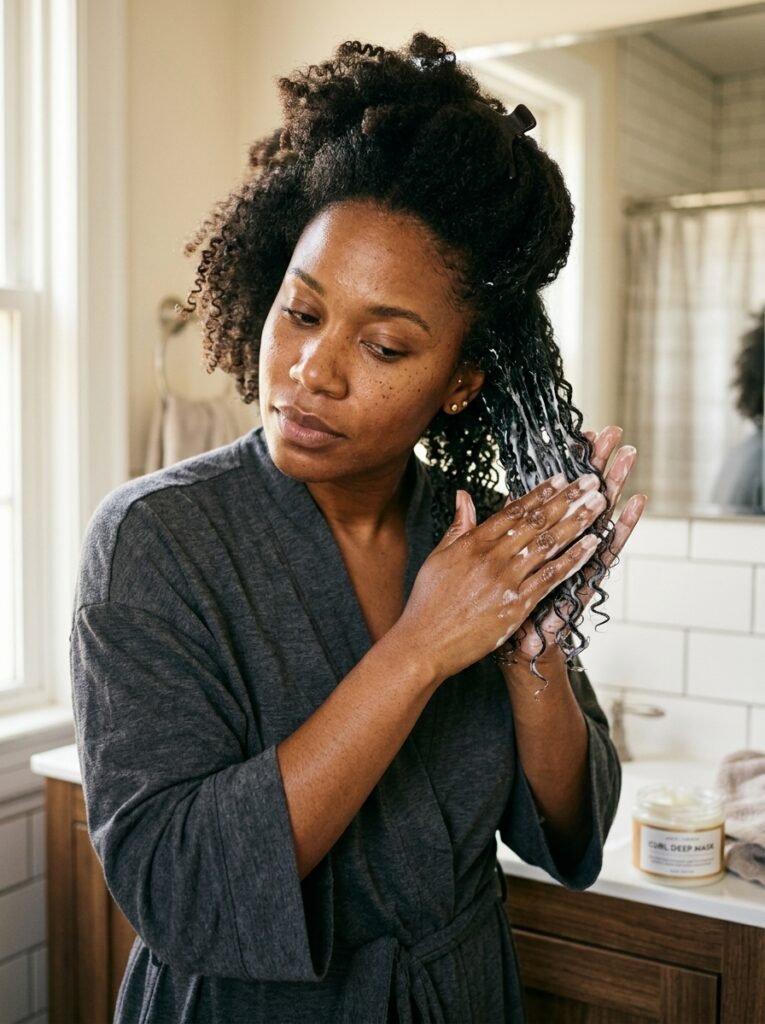
Dry or damaged hair needs a rich, moisturizing mask, and sometimes a protein one to add strength. Look for hydrating, creamy formulas and use them regularly, focusing on the mid-lengths and ends where damage shows most. Color-treated hair fits here too, since coloring can leave hair drier and more porous. Regular trims still matter, because a mask softens damaged ends but cannot glue split ends back together.
Curly and coily hair
Curly and coily hair usually loves a rich moisturizing mask, since its shape makes it drier and more prone to frizz. Apply the mask along the full length, work it through in sections with a wide-tooth comb and consider leaving it on a little longer for extra moisture. A weekly deep condition helps keep curls soft and defined. Once your curls are healthy and hydrated, our roundup of styles for curly hair has plenty of ways to wear them.
Fine or oily hair
Fine or oily hair does best with a light mask used sparingly and kept away from the roots. Heavy, buttery masks can weigh fine hair down and make it look flat or greasy, so choose a lightweight formula, apply only to the ends and use it less often. Rinse very well so nothing is left behind. For sleek, polished looks that suit fine or straight hair, see our ideas for straight hair.
Can you make a hair mask at home?
You can make a simple hair mask at home, and many people use basic kitchen ingredients like mashed banana, honey, yogurt or a little oil. A homemade mask can add moisture and is an easy, low-cost option, though the results are usually gentler and less consistent than a well-made store-bought mask. Apply it to damp hair from mid-length to ends, leave it on for the time you would use for any mask, then rinse thoroughly, since sticky ingredients can be hard to wash out.
A few sensible cautions help. Do a small strand test first to see how your hair responds, avoid ingredients you may be allergic to and keep messy mixtures off your scalp if it is sensitive or irritated. If you have a scalp condition or ongoing hair problems, skip experiments and stick to gentle, proven products. Homemade masks are a fun extra, not a replacement for a good routine.
Common hair mask mistakes to avoid
The most common hair mask mistakes are using one too often, applying it to the roots, not rinsing well and expecting it to repair serious damage. Overusing a mask, especially a heavy one, can leave hair limp and greasy, so stick to roughly weekly and adjust to your hair. Putting a rich mask on your scalp and roots can make them oily and weigh your hair down, so keep it on the lengths and ends.
A few more are easy to avoid. Rinsing poorly leaves residue that dulls hair and can build up, so rinse until the water runs clear. Reaching only for protein masks can backfire, since too much protein leaves some hair stiff, so balance protein with moisture. And no mask fixes badly damaged hair on its own. Pair masks with gentle habits that prevent hair damage, like limiting heat and handling wet hair carefully, for the best results.
When a mask is not enough
A hair mask is not enough when hair is severely damaged, breaking or not improving no matter how often you condition. Masks add moisture and improve how hair feels, but they cannot rebuild badly damaged strands or stop breakage caused by heat, chemical treatments or tight styles. If your ends are frayed and splitting, a trim removes the damage that a mask can only soften.
Look at your overall routine too. Cutting back on heat, avoiding tight styles and being gentle with wet hair often does more than any single product. If your hair keeps breaking, thinning or feeling unmanageable despite good care, a board-certified dermatologist can help you find the cause and the right fix.
Frequently asked questions
Do hair masks really work?
Hair masks do work for adding moisture, softness and shine, though they are not a permanent fix. A mask coats and conditions the hair while it sits, which smooths the cuticle and makes hair feel softer and easier to manage right away. The effect lasts until your next few washes, so regular use keeps it going. Masks cannot repair severe damage or change your hair type, but they make dry or rough hair look and feel noticeably better.
Should I use a hair mask on wet or dry hair?
Most hair masks work best on clean, damp hair rather than soaking wet or fully dry hair. After shampooing, gently squeeze out excess water so the mask is not diluted, then apply it from mid-length to the ends. Some masks are designed for dry hair before washing, so check the label. As a rule, towel-dry until your hair is damp, not dripping, before you apply, so the mask can absorb instead of sliding off.
Can I leave a hair mask in overnight?
You can leave some hair masks in overnight, but it is not always better and depends on the product. Rich, moisturizing masks are usually fine for a longer soak, while protein-heavy masks can leave hair stiff or brittle if left too long, so check the instructions. If you do sleep in one, cover your hair with a cap or an old towel to protect your pillow. For most people, the recommended time on the label works just as well.
Is a hair mask the same as a deep conditioner?
A hair mask and a deep conditioner are basically the same idea, and the terms are often used interchangeably. Both are richer than everyday conditioner and are left on longer to add deep moisture. Some brands call their most intensive treatment a mask and a slightly lighter one a deep conditioner, but there is no strict rule. What matters more than the name is that the treatment suits your hair type and you leave it on for the recommended time.
Can I use a hair mask and conditioner together?
You usually do not need to use a hair mask and regular conditioner in the same wash, since a mask already conditions your hair. On mask days, you can skip your normal conditioner and let the mask do the work. On other days, use your regular conditioner as usual. If your ends still feel dry after rinsing a mask, a small amount of leave-in conditioner or a drop of oil can help seal in moisture.
How long should I leave a hair mask on?
Most hair masks are left on for about five to twenty minutes, though the right time depends on the product, so follow the label. Lighter masks may only need a few minutes, while richer moisturizing masks can sit longer. Leaving a mask on far past the recommended time rarely helps, and with protein masks it can make hair feel stiff. A shower cap or warm towel can help the mask absorb while it sits.
Work a mask into your weekly routine
A hair mask is one of the simplest upgrades you can make to your hair care, and it does not take much time or money. Use a mask that matches your hair type about once a week, apply it from mid-length to ends on damp hair, leave it on for the time on the label and rinse well. Keep your expectations realistic, pair masks with gentle everyday habits and adjust how often you use one based on how your hair feels. Pick a mask that suits your hair and make it your weekly treat.
Ready to style your softer, healthier hair? Explore the styling guides on Aura Hair Style and find a look you love.


2 Comments