

Hair care basics: how to build a simple routine for healthy hair
Healthy hair rarely comes from one miracle product. It comes from a few simple habits done consistently: washing the right way, conditioning where your hair needs it, protecting it from heat and handling it gently. This guide walks you through a practical hair care routine you can adjust for your own hair, whether it is fine and straight or thick and curly. You will learn how often to wash, what to do differently for your texture and which common mistakes quietly cause damage.
Good hair care comes down to a simple, consistent routine: wash your scalp based on how oily it gets, condition the lengths and ends, protect your hair from heat and handle it gently. Match your products to your hair type, and see a dermatologist for ongoing hair loss or scalp problems.

What is a hair care routine?
A hair care routine is the regular set of steps you use to clean, condition, protect and style your hair. At its core it includes washing your scalp, conditioning the lengths and protecting your strands from heat and rough handling. It does not need to be complicated or expensive.
The best routine is the one you can actually keep up. Three or four steps done consistently will do more for your hair than a shelf of products you use once and forget. Everything that follows is built on this idea: start simple, match it to your hair type and stay steady. For a plain-language overview of the fundamentals, MedlinePlus offers helpful general hair care guidance from the U.S. National Library of Medicine.
How do you find your hair type?
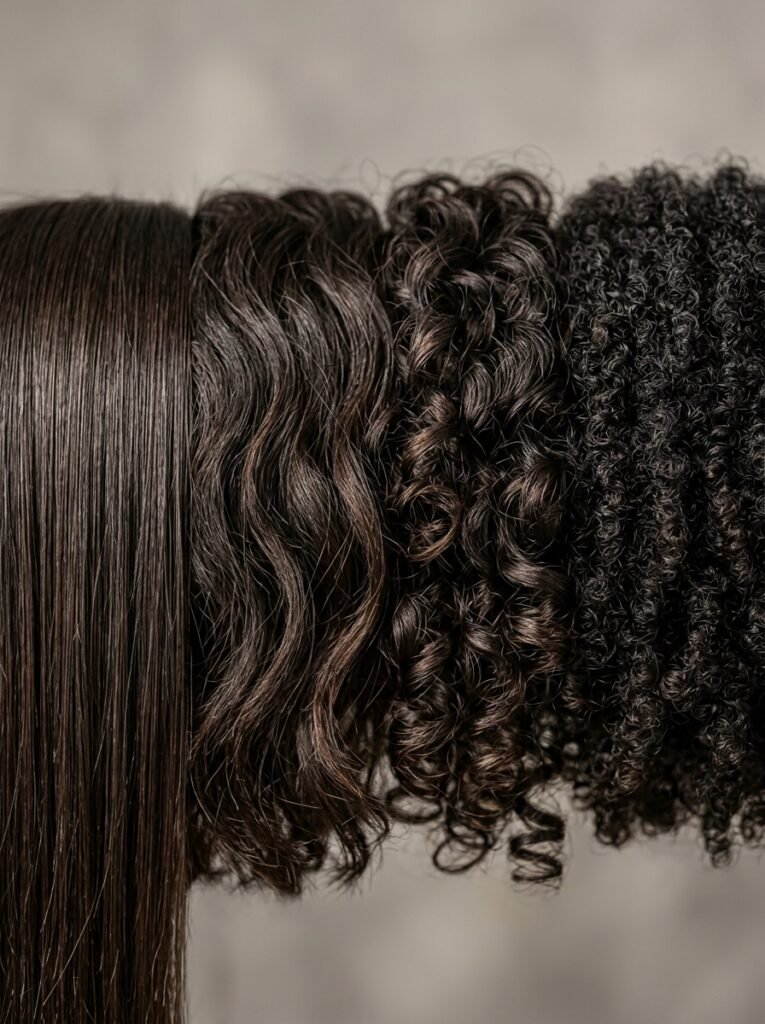
Finding your hair type means looking at three things: your curl pattern, the thickness of each strand and how oily your scalp gets. Curl pattern runs from straight to wavy, curly and tightly coiled. Strand thickness can be fine, medium or coarse, and it affects how much product your hair needs and how easily it gets weighed down. Your scalp can be oily, dry or somewhere in between, which mostly decides how often you should wash.
You can check thickness by looking at a single strand in good light. A fine strand is hard to see and feels almost weightless, while a coarse strand is easy to see and feels thicker between your fingers. Scalp type is easy to judge too: if your roots feel greasy a day after washing, your scalp runs oily. If your ends feel dry and rough while your roots stay comfortable, your hair leans dry.
What is hair porosity?
Hair porosity describes how easily your hair absorbs and holds moisture, and it helps explain why some products work for you and others do not. Low porosity hair resists water and can feel like products sit on top of it, so lightweight formulas and a little warmth help them soak in. High porosity hair absorbs moisture quickly but loses it just as fast, so richer creams and leave-in conditioners help it stay hydrated. If you are unsure, most people fall somewhere in the middle and do fine with balanced, moisturizing products.
How often should you wash your hair?
How often you should wash your hair depends mainly on how oily your scalp gets and your hair type. There is no single correct number. The American Academy of Dermatology suggests washing based on how oily your scalp is: an oily scalp with fine or straight hair may do best with daily or near-daily washing, while dry, curly, coily or thick hair can often go several days or longer between washes.
A few practical cues help. Wash when your roots look or feel greasy, when a workout leaves your scalp sweaty or when buildup makes your hair hard to style. If your ends feel dry and straw-like, you are probably washing too often or not conditioning enough. If you have oily roots and want styles that stay fresh between washes, our guide to styles that work for oily hair has ideas that stretch the time between shampoos.
How to wash and condition your hair the right way
Shampoo belongs on your scalp and conditioner belongs on the lengths and ends of your hair. That one habit prevents a lot of common problems. When you scrub shampoo down the full length, you strip and rough up the ends, which leaves them dull and prone to breakage. When you coat the scalp in heavy conditioner, you weigh the roots down and can make them look greasy faster.
Here is the simple version. Wet your hair fully, then work a small amount of shampoo into your scalp with your fingertips, not your nails, and let the suds rinse down the lengths on their own. Rinse well. Then apply conditioner from about mid-length to the ends, wait a minute or two and rinse. According to the American Academy of Dermatology, fine or straight hair does best with conditioner mainly on the ends, while dry or curly hair benefits from conditioner along the full length. Finish with a cool rinse if you like, which many people find helps hair look smoother.
A simple daily and weekly hair care routine
A simple routine has a few everyday steps and one or two weekly extras. The everyday part keeps your hair clean, moisturized and protected. The weekly part gives it a deeper dose of moisture or repair. You do not need every product on the shelf, just the few that match your hair type.
Everyday steps
Everyday care is mostly about gentle handling and protection between washes. On wash days, shampoo the scalp and condition the ends as described above. On non-wash days, refresh your style, smooth any frizz with a little leave-in conditioner or light oil on the ends and detangle carefully with a wide-tooth comb. Before any heat styling, use a heat protectant. These small steps add up over time.
Weekly extras
Once a week, add a deeper treatment based on what your hair needs. A deep conditioner or hair mask gives dry or damaged hair extra moisture, and a gentle scalp cleanse or clarifying wash can remove buildup for oily or product-heavy hair. Curly and coily hair often loves a weekly deep condition, while fine hair usually only needs a light one so it does not go limp. Adjust the frequency to your results rather than following a strict rule.
How to protect your hair from heat damage
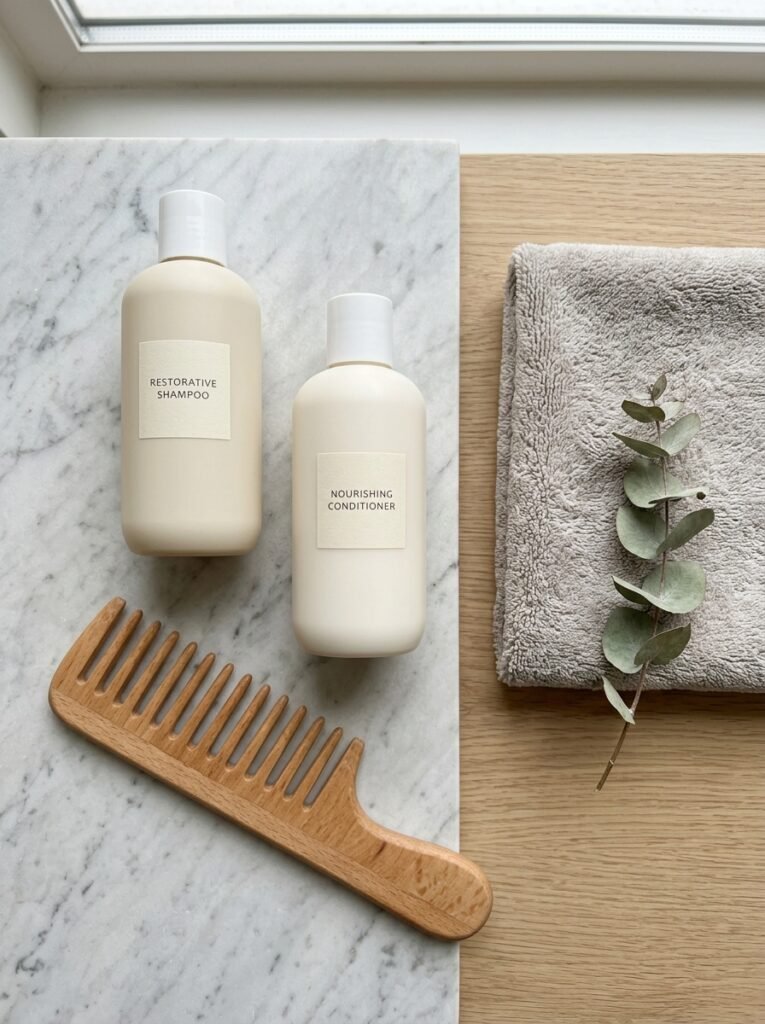
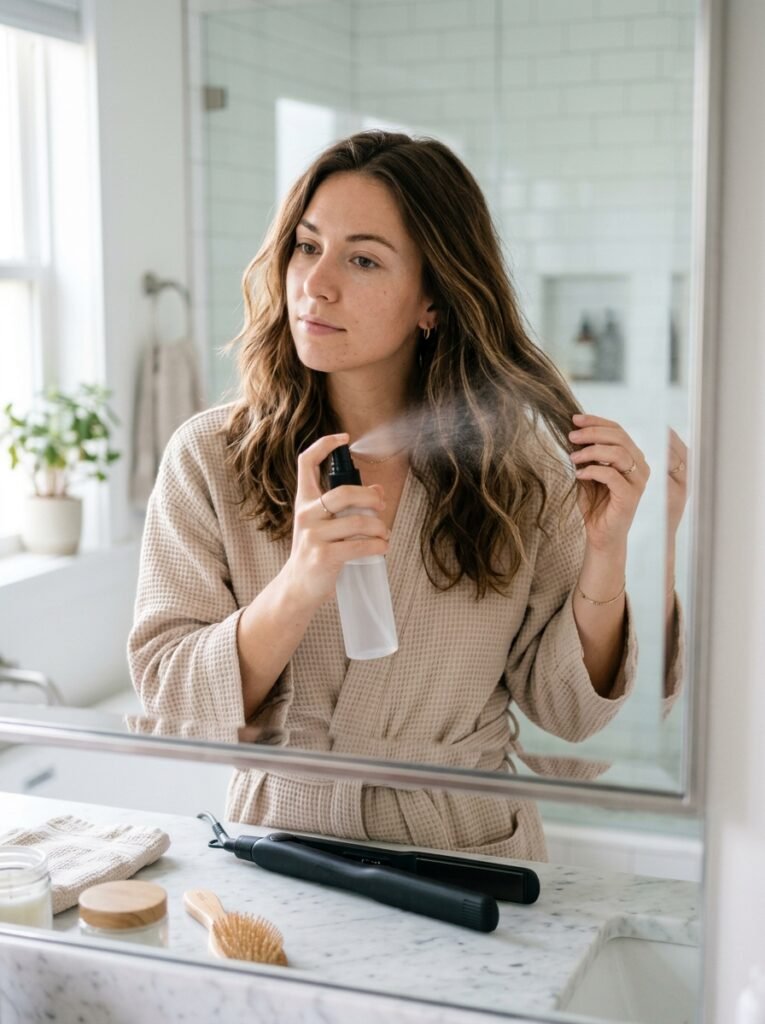
To protect your hair from heat, use a heat protectant, keep the temperature on low or medium and give your hair heat-free days. Excessive heat can damage any hair type, so the goal is to use less of it and to shield your strands when you do. The American Academy of Dermatology advises limiting blow drying and hot tools and using a product that protects hair from heat whenever you style with them.
Practical habits make a real difference. Towel dry gently or let your hair air dry partway before you reach for a blow dryer. Apply heat protectant evenly, focusing on the ends where hair is most fragile, and let it dry before you style. Keep the iron moving instead of holding it on one section, and aim to use hot tools less often rather than every day. On the days you skip heat, you also skip a chance for damage.
Caring for different hair types
Different hair types need different care, mostly around moisture, washing frequency and how gently you handle the hair. The core routine stays the same, but the emphasis shifts. Below are the main adjustments by type.
Curly and coily hair
Curly and coily hair needs extra moisture and very gentle handling, since its shape makes it drier and more fragile than straight hair. Wash less often, condition generously and detangle carefully. The American Academy of Dermatology recommends detangling curly hair while it is wet, using a leave-in conditioner and a wide-tooth comb or a brush made for curls, and working in sections. A weekly deep conditioner helps keep curls soft and defined. When your curls are healthy, you can play with more of them, and our roundup of hairstyles for curly hair has plenty of ideas.
Straight and fine hair
Straight and fine hair tends to get oily faster and can go flat under heavy products, so lighter is usually better. Wash when the roots feel greasy, keep conditioner on the ends and choose lightweight formulas so your hair does not go limp. Avoid piling on oils at the roots. If you want polished, smooth looks that suit this texture, see our ideas for straight hair.
Oily hair and scalp
Oily hair mostly needs the right wash rhythm rather than more product. Wash often enough to keep the roots fresh, concentrate shampoo on the scalp and keep conditioner on the ends only. Dry shampoo or a refreshed style can buy you an extra day between washes. Resist the urge to touch or brush your hair constantly, since that spreads oil from your scalp down the lengths.
Color-treated or damaged hair
Color-treated or damaged hair is drier and more delicate, so it needs gentler washing and more moisture. Wash less often with a mild, color-safe shampoo, condition well and lean on weekly masks to rebuild softness. Keep heat low and infrequent, and trim damaged ends so splits do not travel further up the strand. Damage cannot be fully reversed, so prevention and steady moisture matter most.
Common hair care mistakes to avoid
The most common hair care mistakes include over-washing, skipping heat protection, rough towel drying and wearing tight styles that pull on the roots. Each one is easy to fix once you know about it. Over-washing strips natural oils and leaves hair dry, so match your wash frequency to your scalp instead of a fixed schedule.
A few more are worth naming. Rubbing hair hard with a towel roughs up the cuticle, so blot and squeeze gently or use a soft microfiber towel instead. Brushing aggressively, especially the old idea of a hundred strokes a day, can cause split ends. Tight ponytails, buns, braids and extensions worn constantly pull on the hair and, as the American Academy of Dermatology notes, can lead to breakage and even permanent hair loss over time. Wear looser styles when you can and give your hair regular breaks.
When to see a dermatologist about your hair
See a board-certified dermatologist if you notice ongoing hair loss, thinning, a very itchy or flaky scalp or any reaction to a product. Everyday care can prevent a lot of damage, but it cannot treat a medical condition. A dermatologist can find the cause of hair loss or scalp problems and recommend treatment, and the earlier you address it, the better the likely result.
You should also check with a professional if a new product causes redness, itching, burning or swelling, since that can signal an allergic reaction or irritation. If a store-bought routine is not helping and something feels off, it is worth getting your hair and scalp looked at rather than guessing.
Keep it simple and stay consistent
Healthy hair is built on a short list of habits you repeat, not a cabinet full of products. Wash your scalp on a schedule that suits your oil levels, condition the lengths, protect against heat and handle your hair gently. Adjust the details for your hair type, fix the common mistakes and give any new routine a few weeks to show results. Pick one change to start with this week, and let good habits do the rest.
Ready to put a fresh look on your healthier hair? Browse the styling guides on Aura Hair Style and find a look that suits your texture and length.